Shanghai as Container - Three Spaces, Three Foreign Aesthetics, One City
魔都容器——三种空间,三种舶来的美,一座城
Shanghai In-Situ Series
上海在地空间系列
Shanghai has a particular ability: it does not digest foreign things. It holds them.
Persian, Japanese and European aesthetics in most cities would feel out of place, like objects set down in the wrong room. But in Shanghai, they settle quietly, take root, and find the people who understand them. This is not an accident. From the moment Shanghai opened its ports, it was never a closed city. Over a century of concession history trained its people in a rare kind of aesthetic flexibility — neither blindly deferential to the foreign, nor resistant to it, but rather open in a way that takes what is beautiful from anywhere in the world, weaves it into the fabric of daily life, and makes it into something that belongs here.
We call this quality haipai (海派)— the Shanghai sensibility.
Today I am not taking you to the Bund or a trending café. Instead, I want to find three spaces tucked into the back streets of this city: a Persian rug store, a Japanese concept store, and a European vintage home shop. They have nothing obvious in common. Yet they share the same soil, and together they form one of the quietest and most honest expressions of what Shanghai actually is.
上海有一种特别的能力:它不消化外来的东西,它收纳它们。
波斯的、日本的、欧洲的,这些美学在别的城市可能显得突兀,像是错放的展品。但在上海,它们安静地落下来,生了根,找到了懂它们的人。这不是偶然。上海从开埠的那一刻起,就不是一座封闭的城市。一百多年的租界历史,让这里的人练就了一种罕见的审美弹性——既不盲目崇洋,也不拒绝异域,而是以一种超然的姿态,把世界各处的美收进来,揉进自己的生活肌理里,成为独属于这座城的东西。
我们把这种气质叫做海派。
今天不带你去外滩,不带你打卡网红咖啡馆。我们要找的,是三个藏在上海街巷里的空间——一间波斯地毯店,一间日式买手店,一间欧洲中古家居。它们彼此毫不相关,却共享同一片土壤,共同构成了魔都美学最安静、也最真实的那一面。
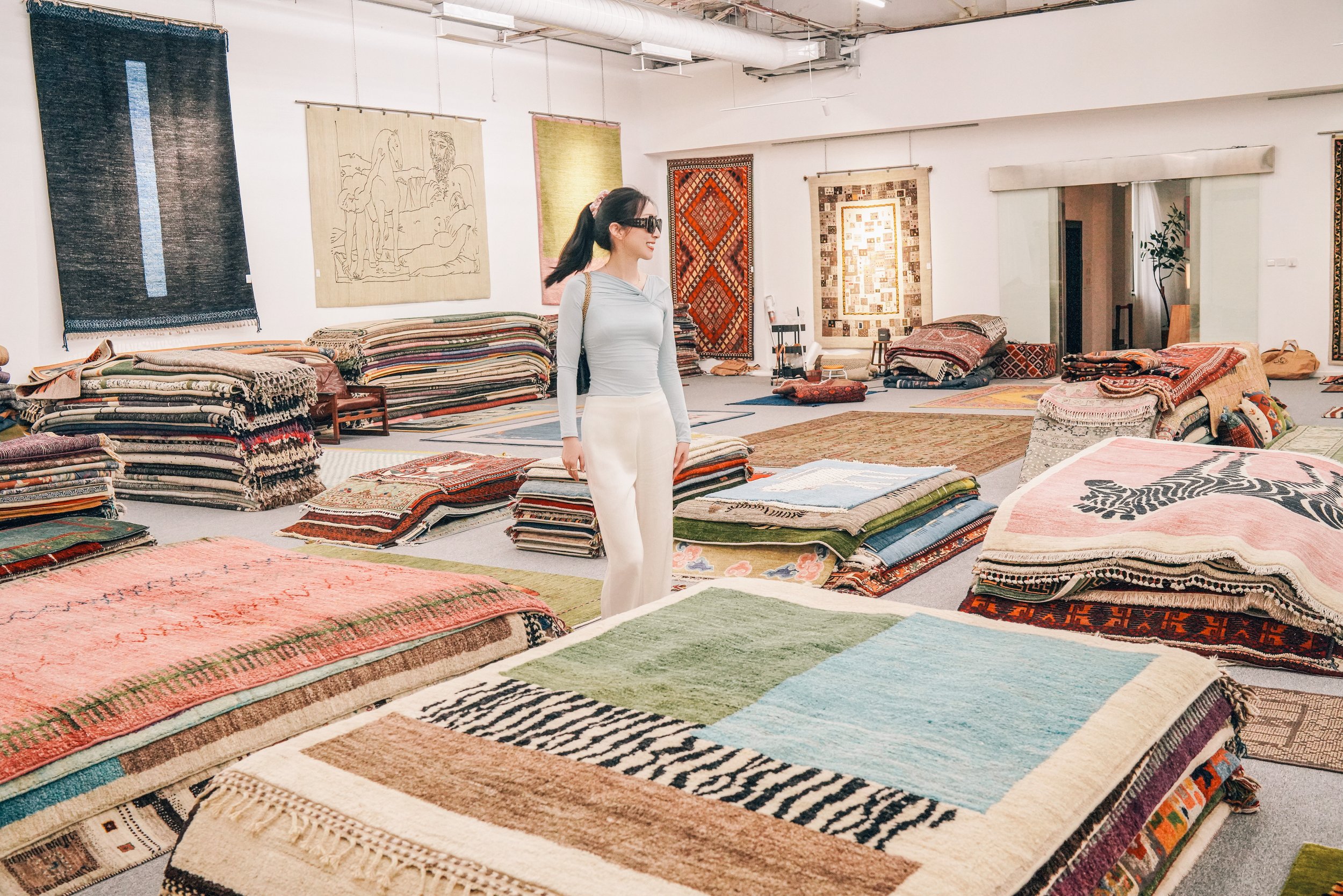
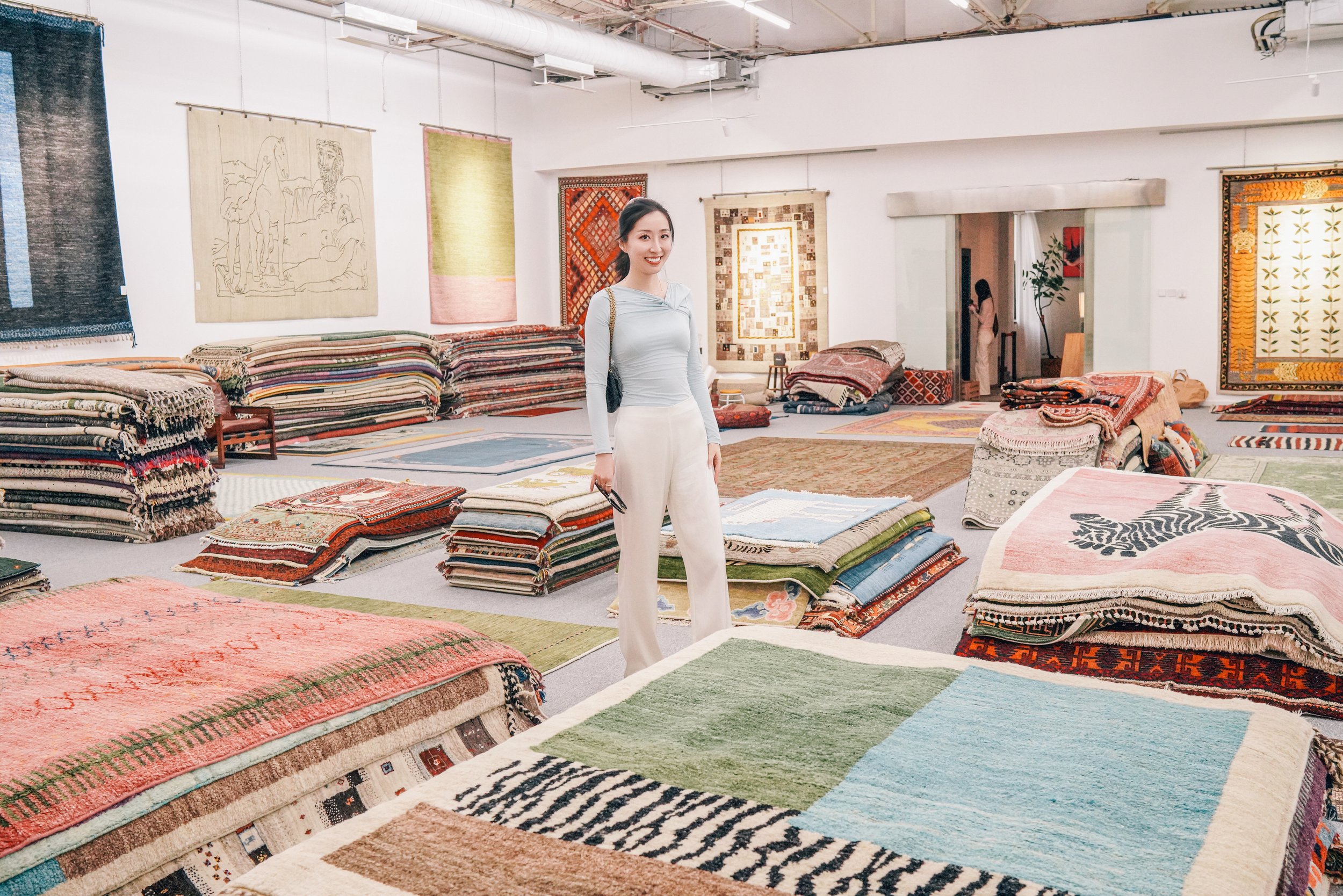
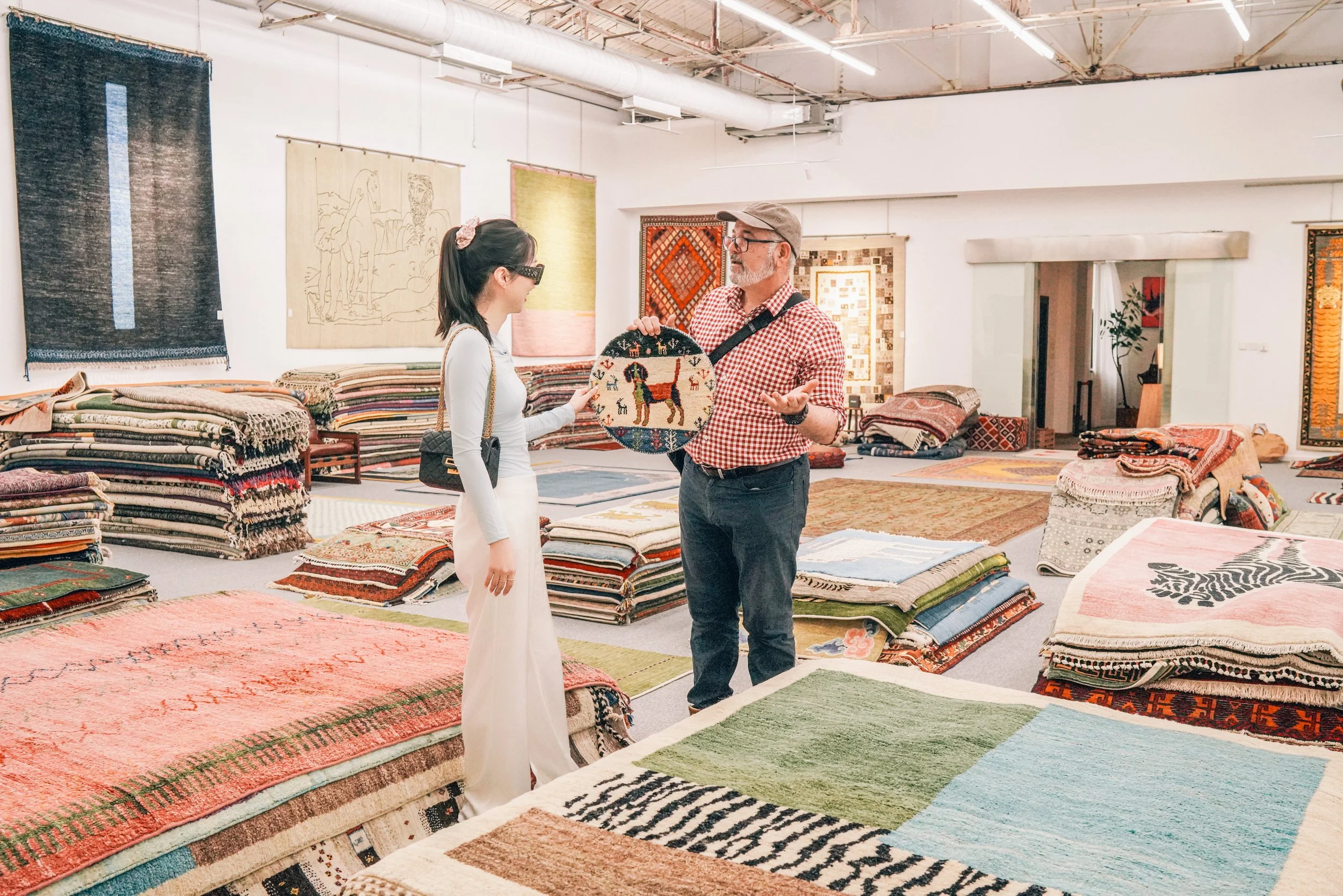
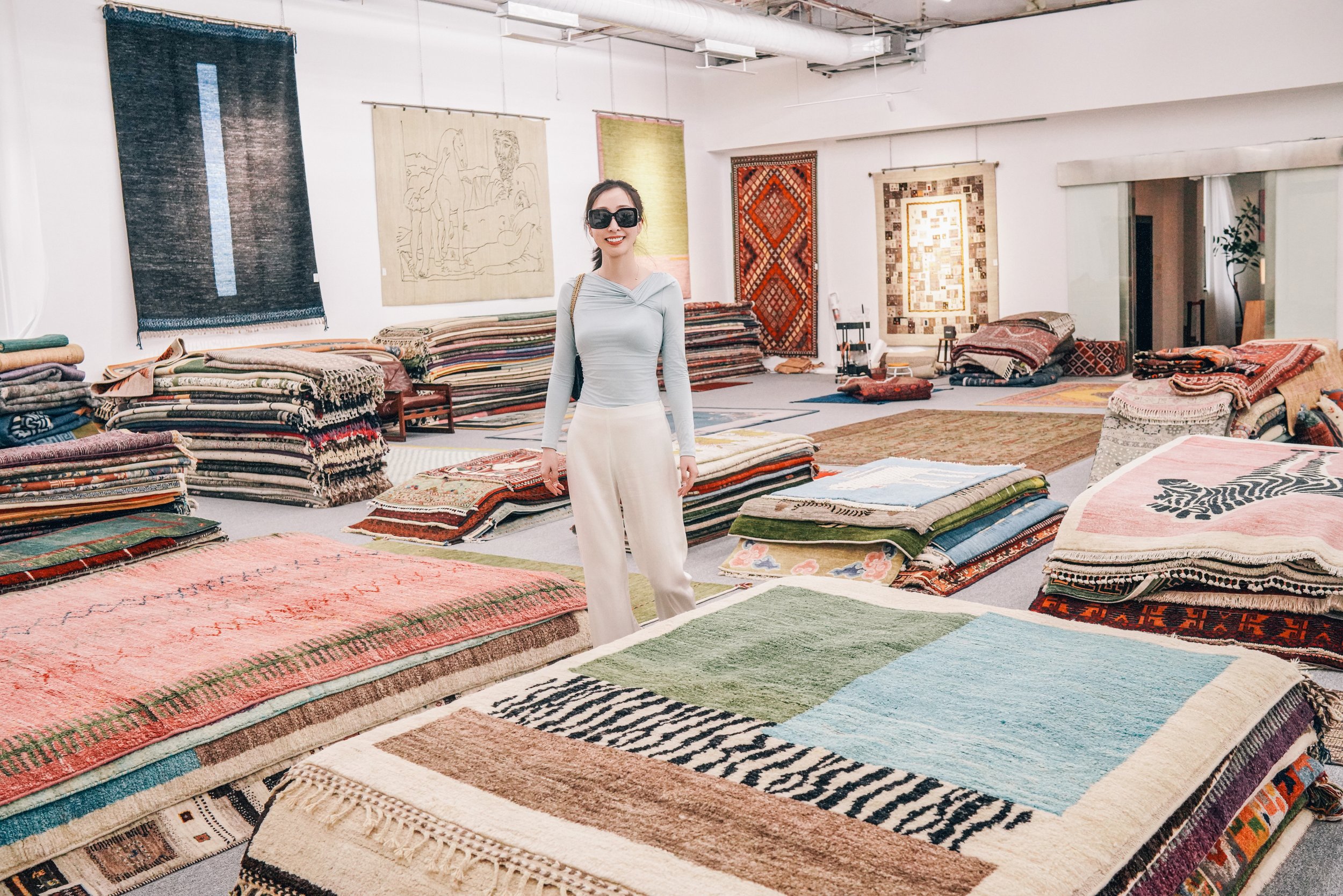
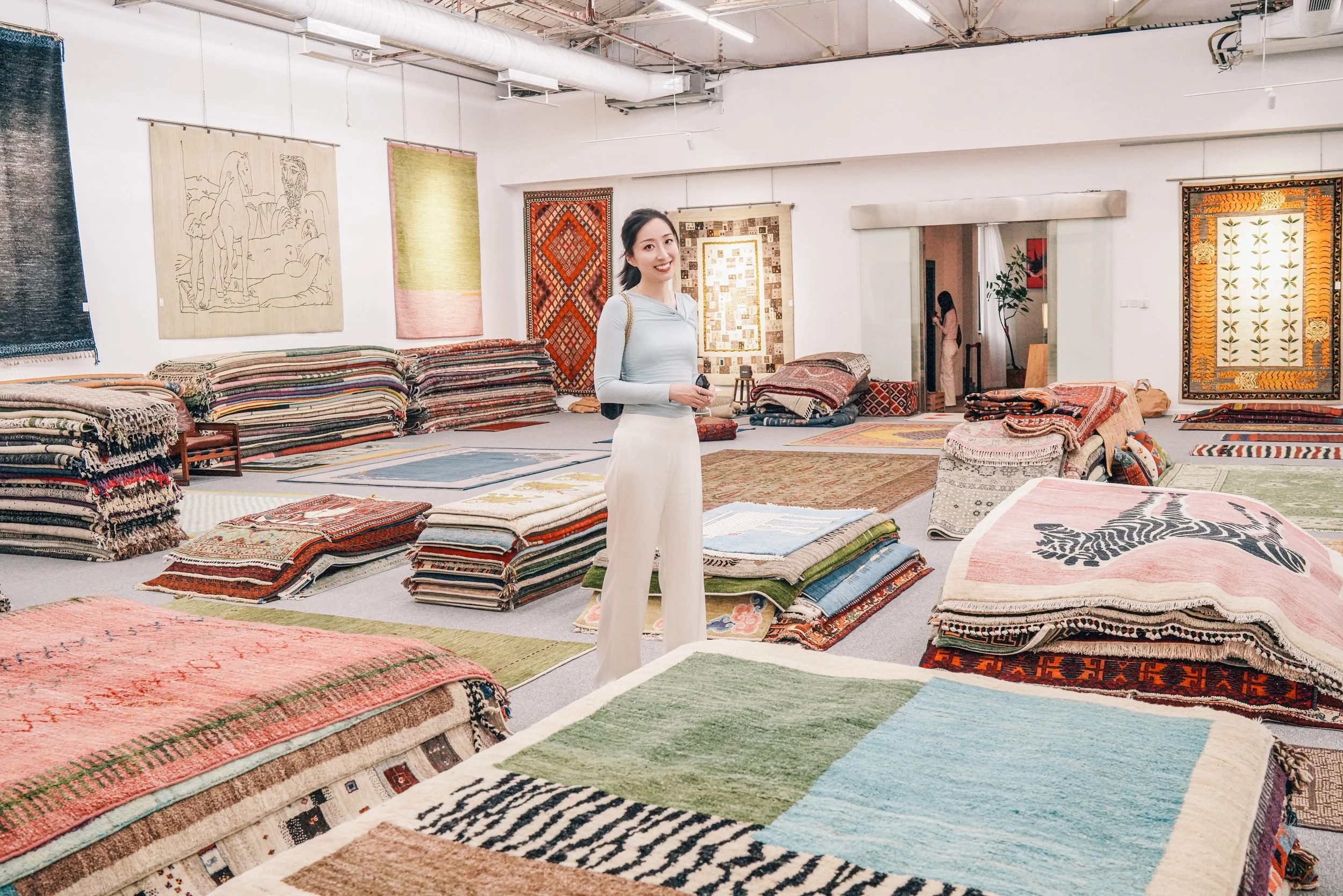
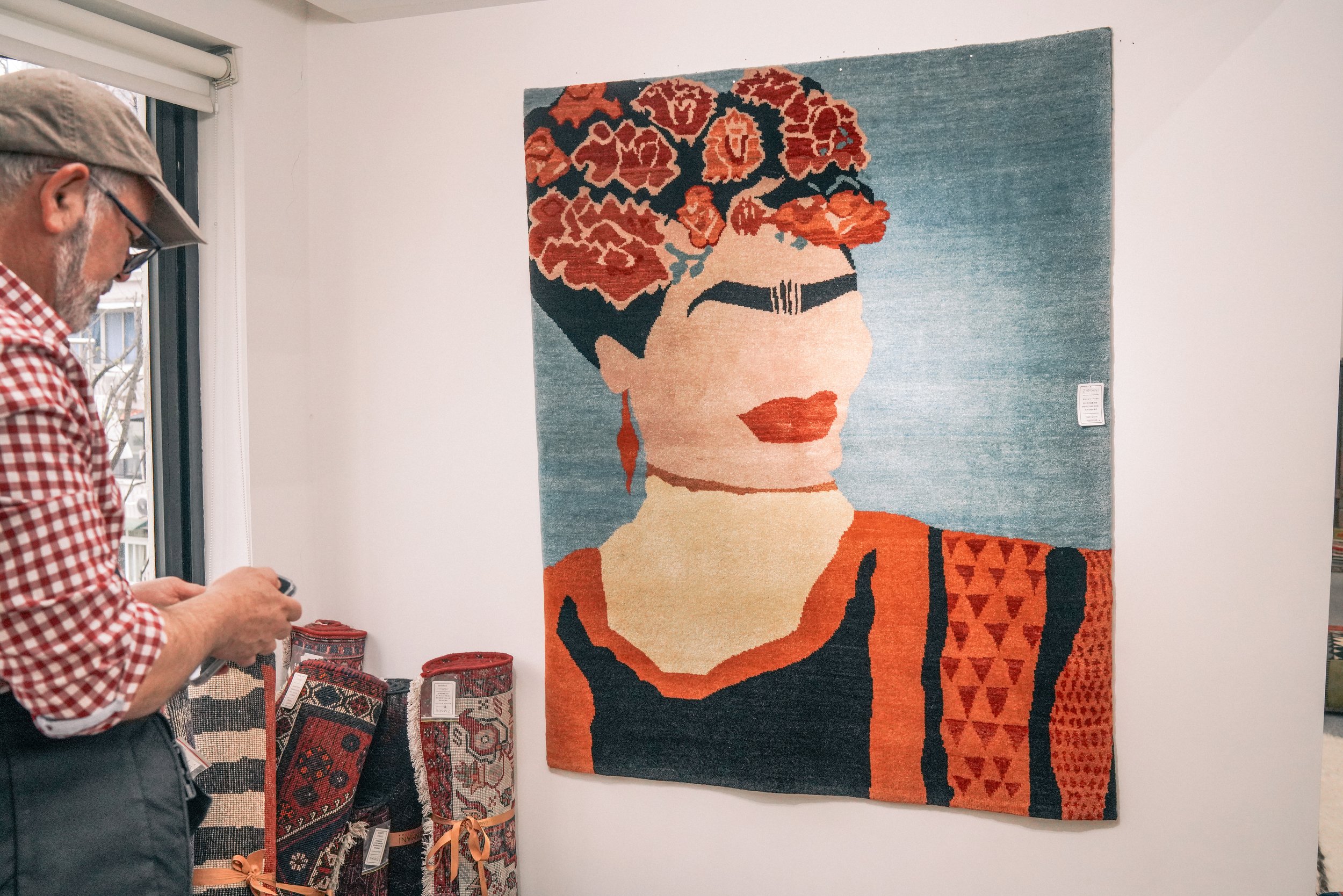
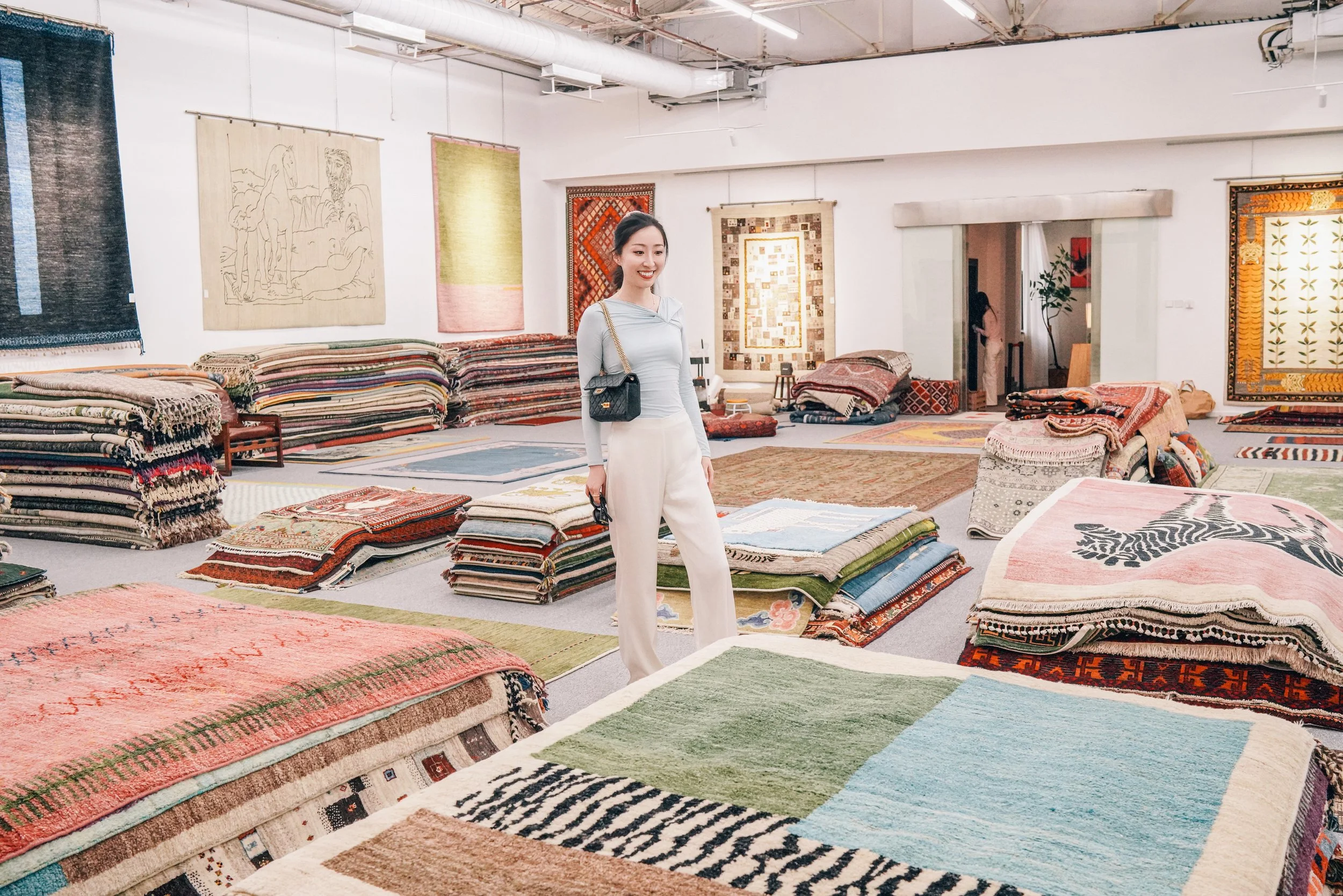
I. Zamani — Step into a Rug, Step into Another Century
When my Australian friend Mark and I walked into Zamani, we both stopped for a second.
Not because it was beautiful, though it was. It was because the feeling was so completely unlike Shanghai.
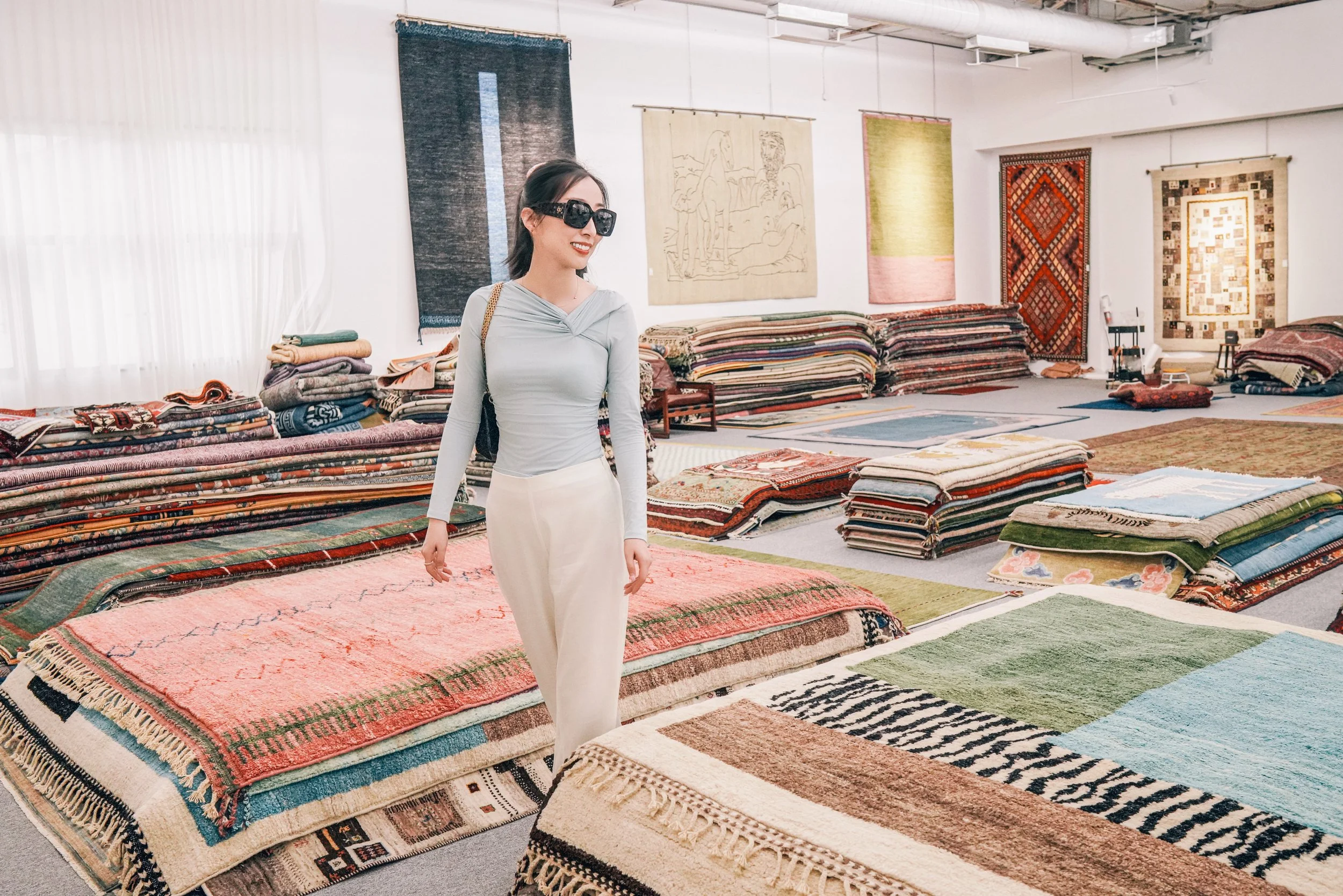
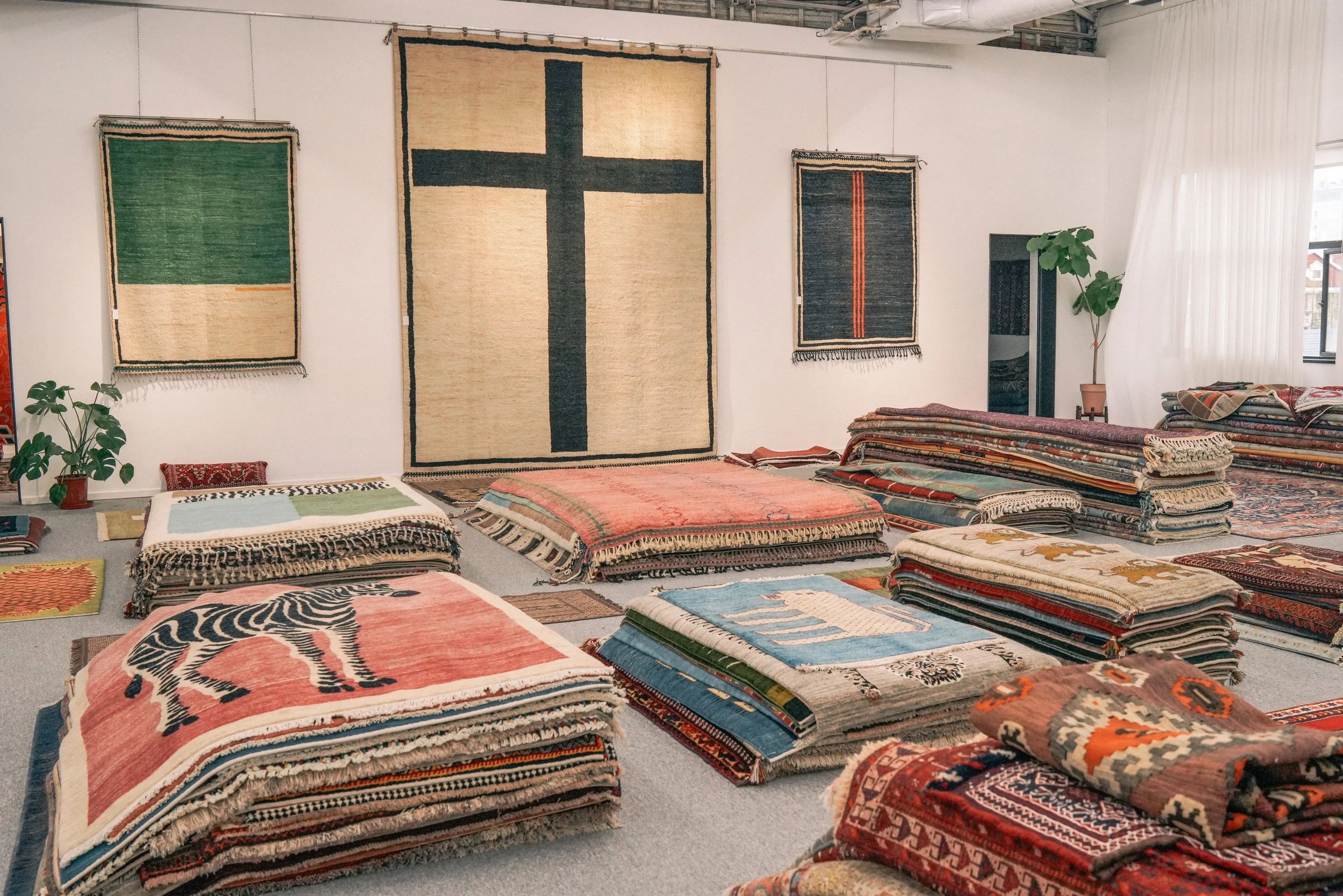
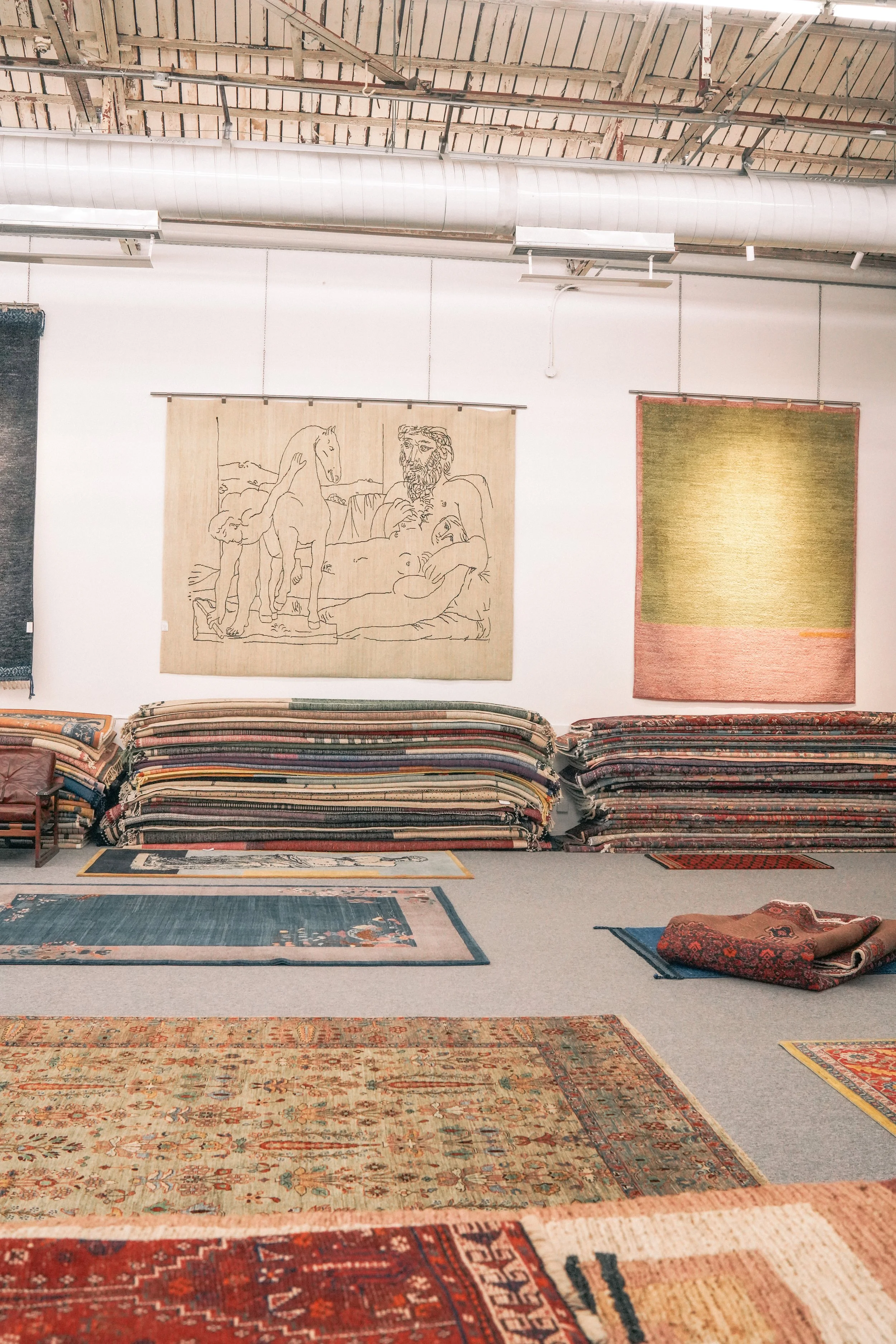
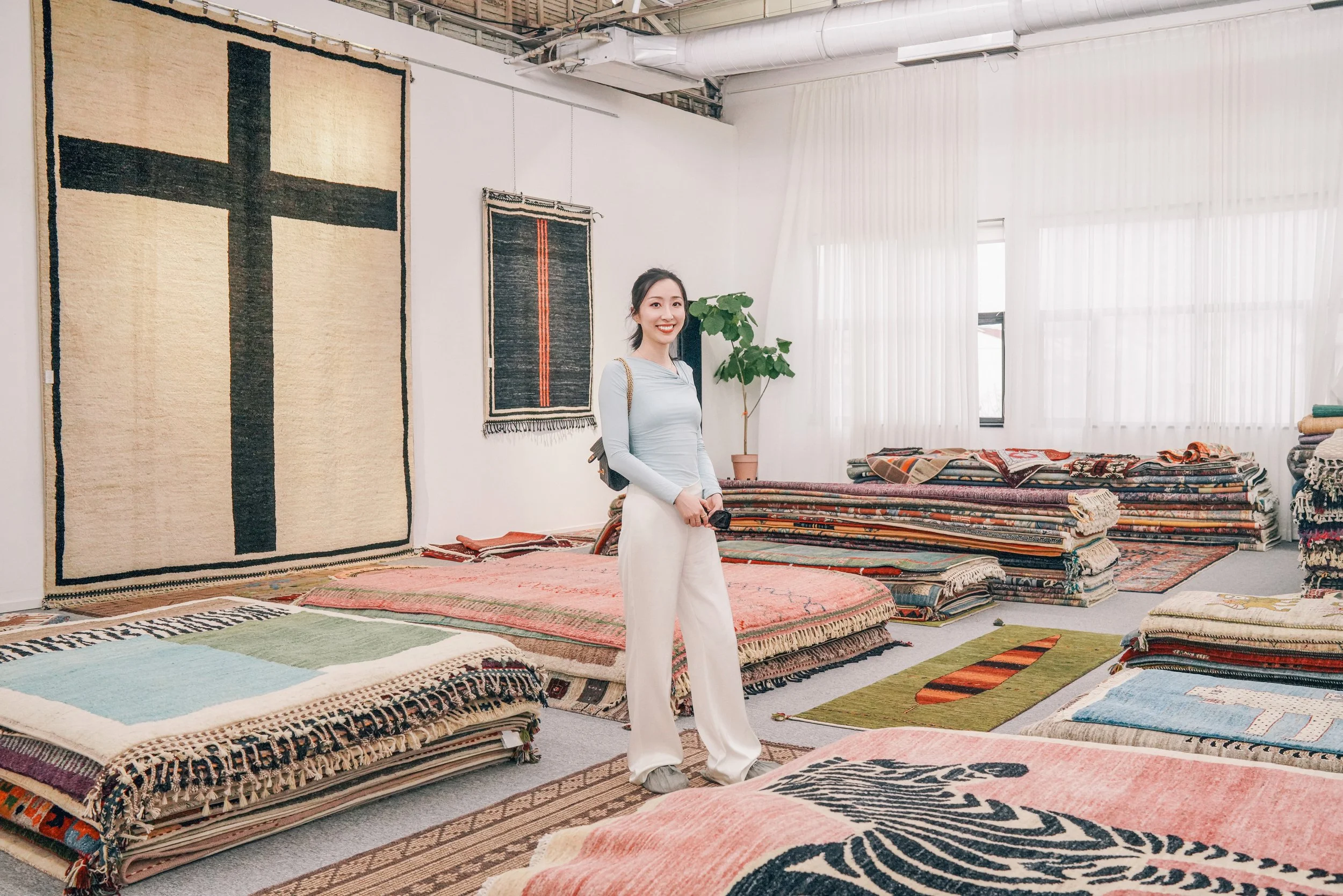
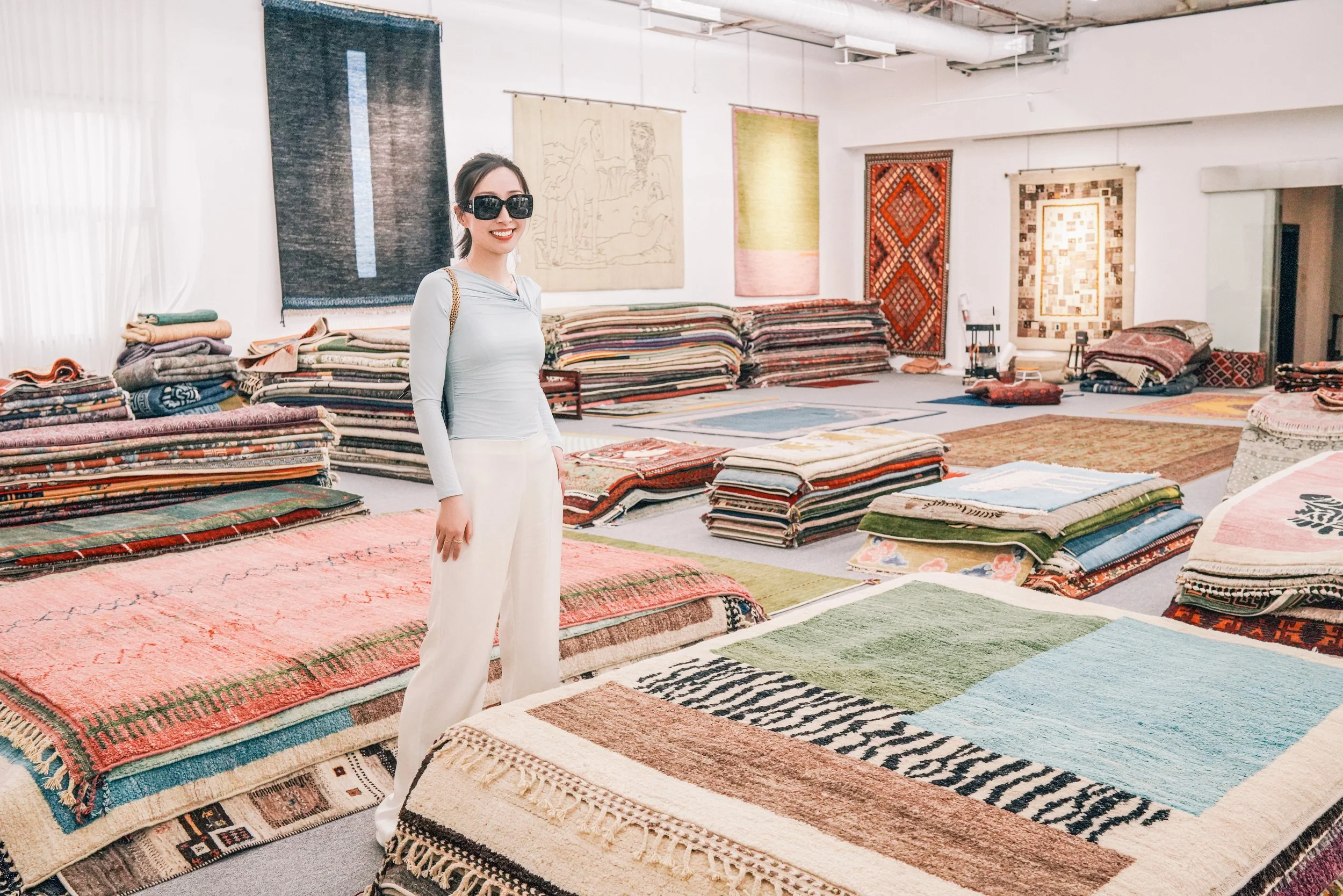
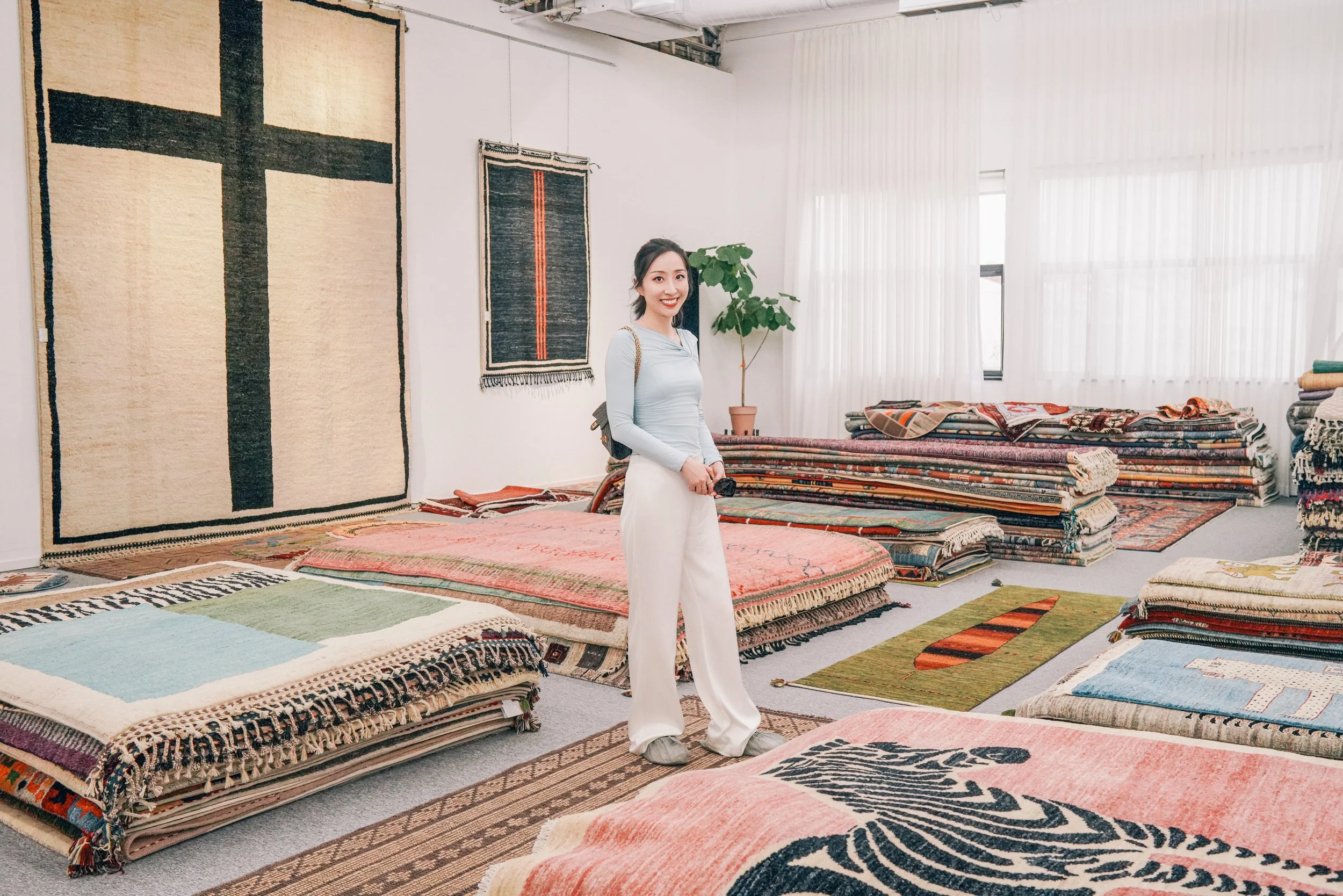
Enormous handmade rugs fell from the ceiling in overlapping layers, filling the full depth of the space. The colours were the kind you only get from natural plant dyes, not saturated or sharp, but worn in, like something that had been sunned and used and sunned again. Terracotta red, deep indigo, desert yellow, filling your whole field of vision. You could have been inside a bazaar in the Middle East, or at the end of a narrow street in Isfahan.
Zamani is an Iranian rug brand with over a century of history. Its patterns draw from both traditional and contemporary sources, and every piece is hand-knotted, with density measured in knots per square decimetre. The tightest work takes the longest, and the longest work tends to be the most composed. A master craftsman might spend two or three years completing a single mid-sized piece. Zamani's third-generation director, Matin Zamani, brought this tradition to China with an international vision, and now, in Shanghai, you can encounter the art of Persia in person.
Mark crouched down, holding up a small round rug printed with a dog pattern, calling his wife back in Australia. He clearly wanted it, and needed her sign-off. A few minutes later he came back over with a grin and, in slightly mischievous Chinese, told me that he was apparently qi guan yan, henpecked. We all laughed.
Zamani's presence in Shanghai makes complete sense. This city has never lacked people willing to pay for genuine craft, or eyes capable of distinguishing expensive from worth it. Persian rugs survive here because the resonance is real: crossing culture, crossing geography, and landing in exactly the right place.
一、Zamani|走进地毯,走进另一个世纪
和一个澳洲朋友Mark一起走进Zamani的时候,我们都惊叹了一下。
不是因为惊艳,而是因为——那种感觉太不像上海了。
一幅幅巨型手工地毯从天花板垂落,错落叠挂,占满了整个空间的纵深。颜色是那种只有天然植物染料才染得出来的色调——像是被时间晒过、用过、再晒过的颜色。赭红、藏蓝、沙漠黄,铺满视野,仿佛置身于某个中东集市的深处,或是伊斯法罕某条细长的街巷里。
Zamani地毯是一个拥有百年历史的伊朗地毯品牌,地毯图案繁复,结合了传统与现代元素。每一幅都是手工打结,密度以"道"计算,越密的工艺越耗时,越耗时的往往越安静。一位老匠人可能花上两三年,才完成一幅中等尺寸的作品。Zamani品牌的第三代负责人Matin Zamani,以他国际化的视野,将这一传统艺术推到了中国,让我们在上海感受来自波斯的艺术魅力。
Mark蹲下来,手里拿着一幅狗狗图案的圆形地毯,正在连线大洋彼岸的妻子。Mark看中了这个可爱的小毯子,需要询问妻子的意见。过了一会爱搞怪的Mark,跑过来和我用中文开玩笑说自己是一个“妻管严”,我们几个听完哈哈哈大笑。
Zamani的存在,在上海是有道理的。这座城市从来不缺愿意为真正的手工艺掏钱的人,也不缺有能力辨别"贵"与"值"的眼睛。波斯地毯在上海能活下来,靠的就是这种审美共鸣——跨越了文化,跨越了地理,落在了对的土壤里。
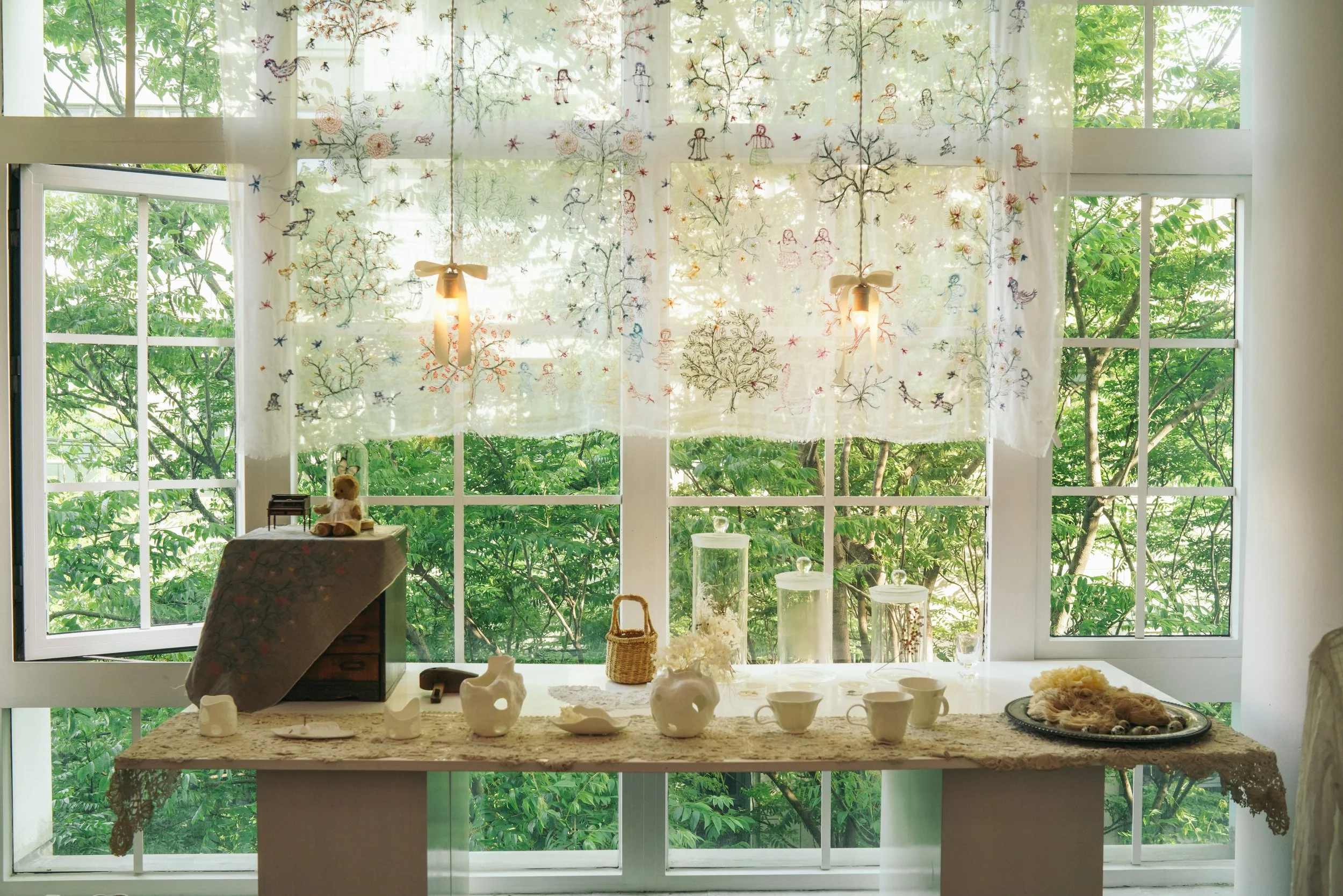
II. Hachi Living Room — Japanese Restraint, Beneath the Plane Trees
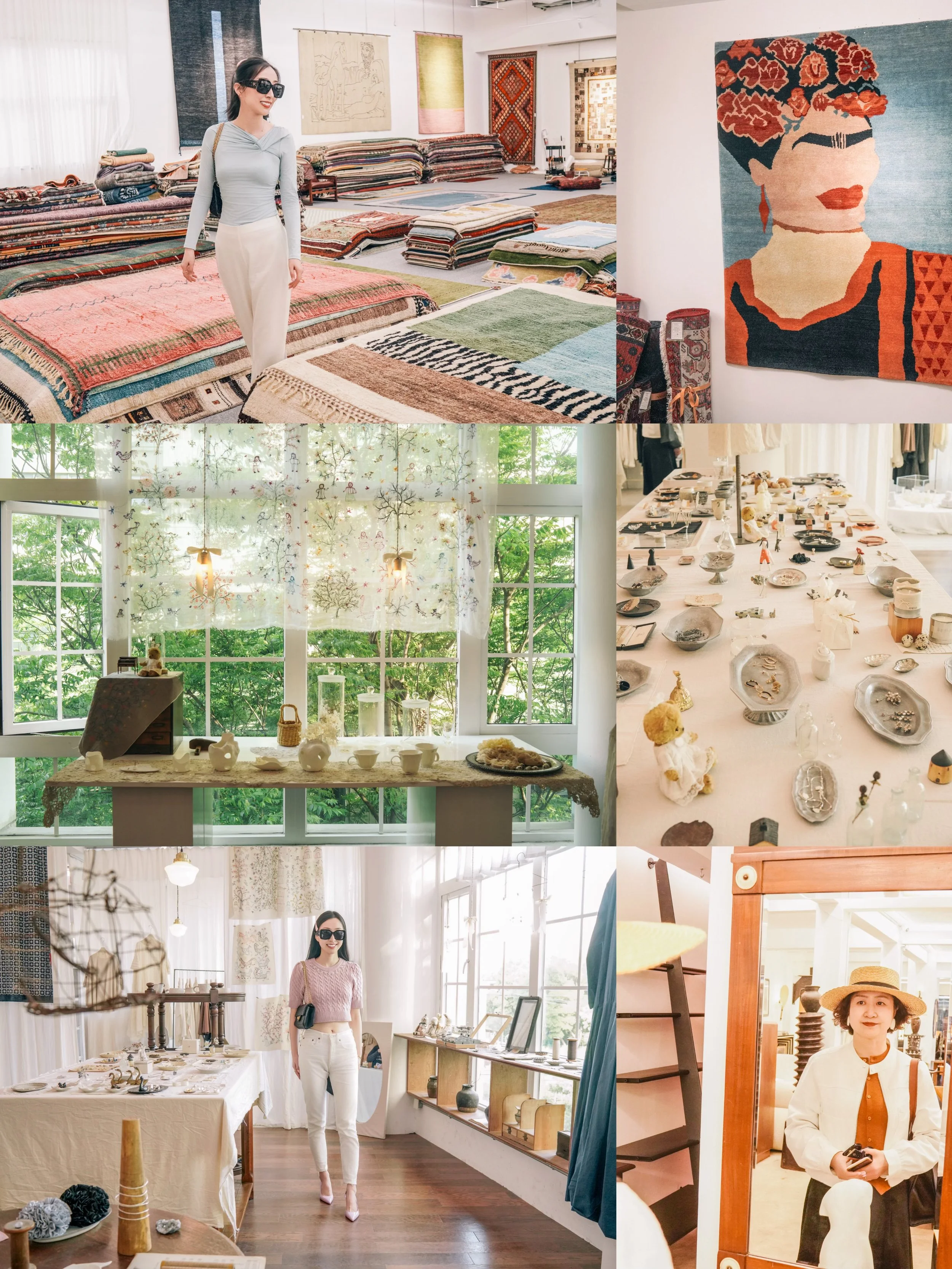
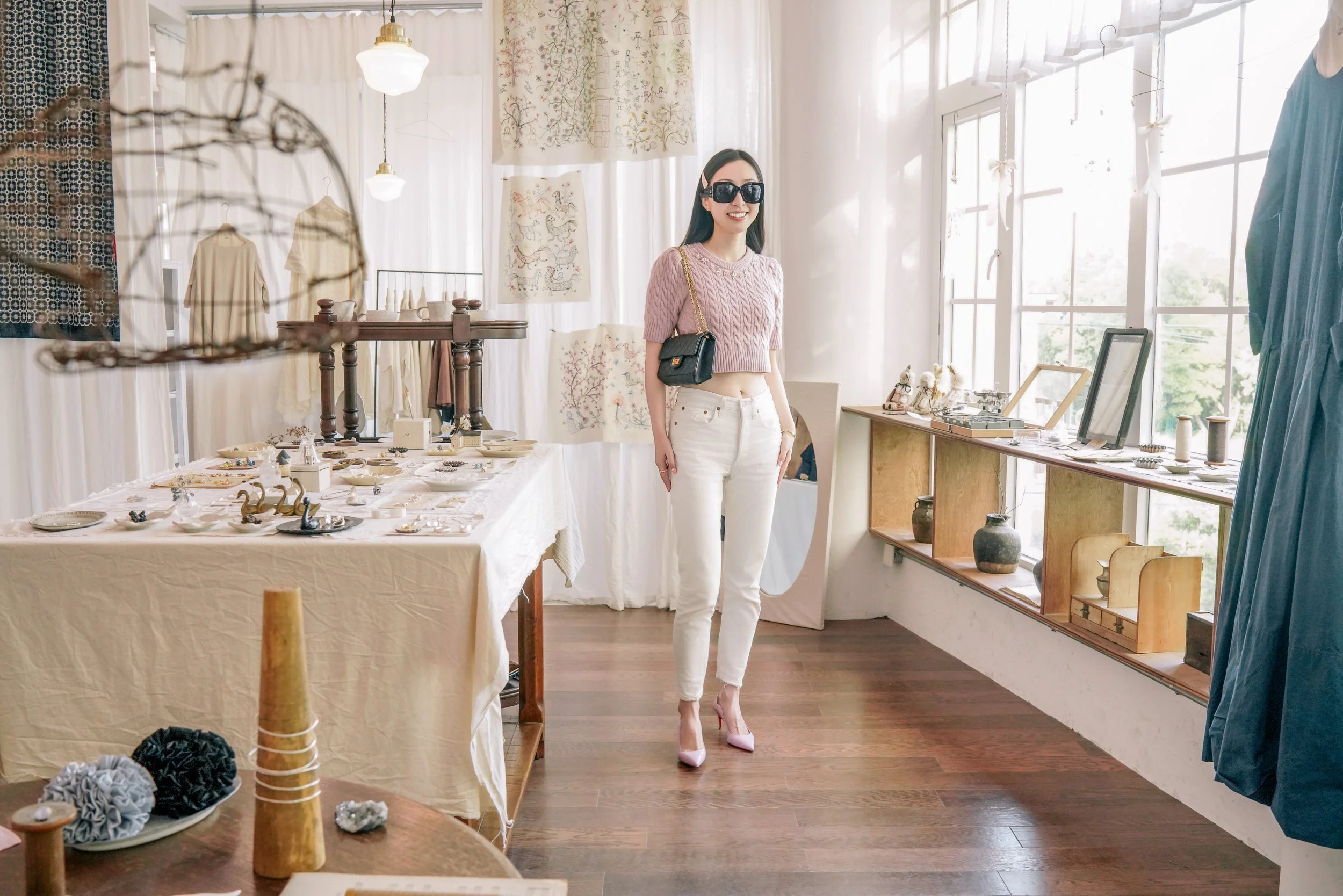
At Hachi, you are given tea before you have asked for anything.
It arrives as you step in, brought by one of the staff. That gesture tells you immediately that this is not an ordinary shop. It is more like a space where someone lives, and where, as it happens, certain things worth taking home are on display.
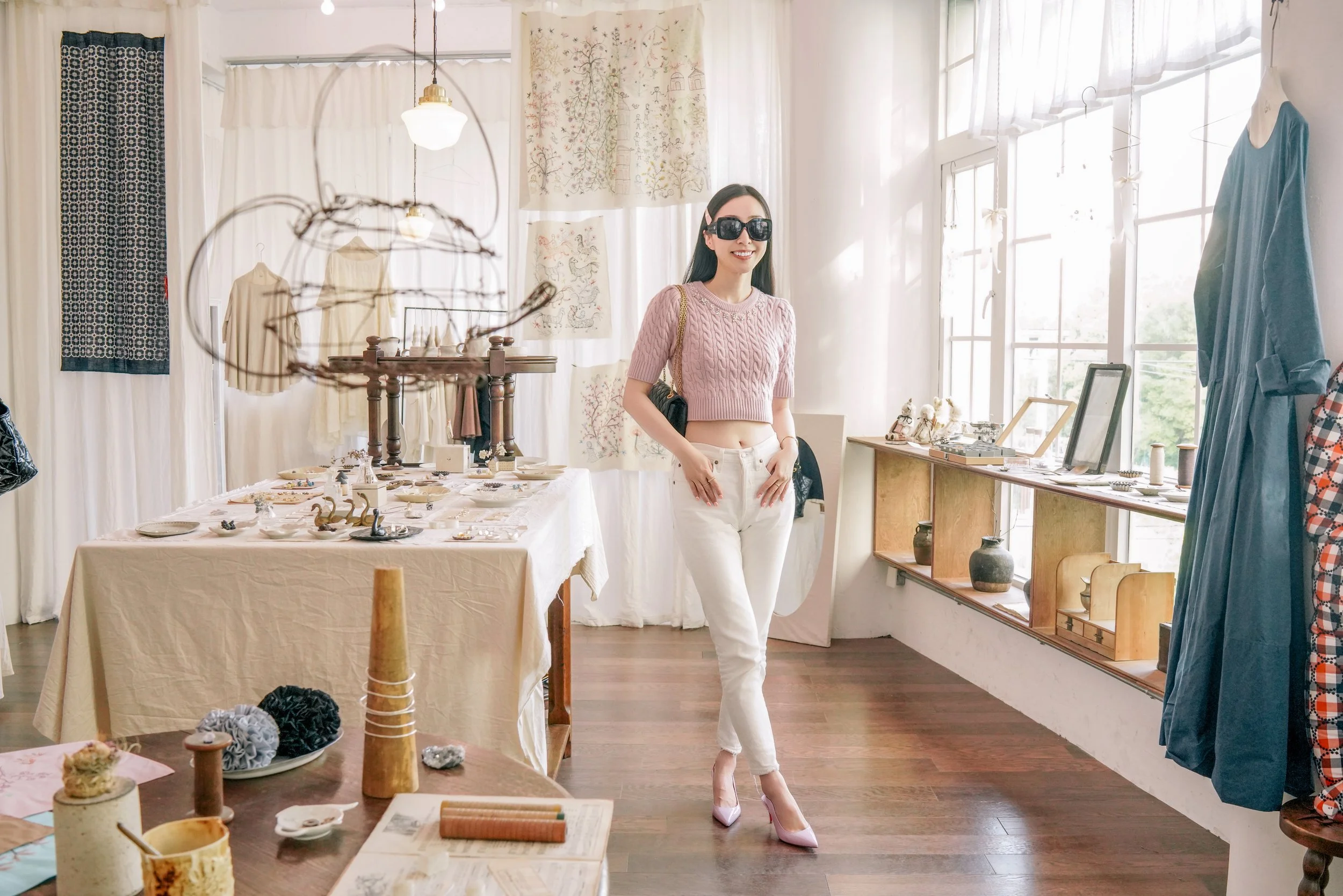
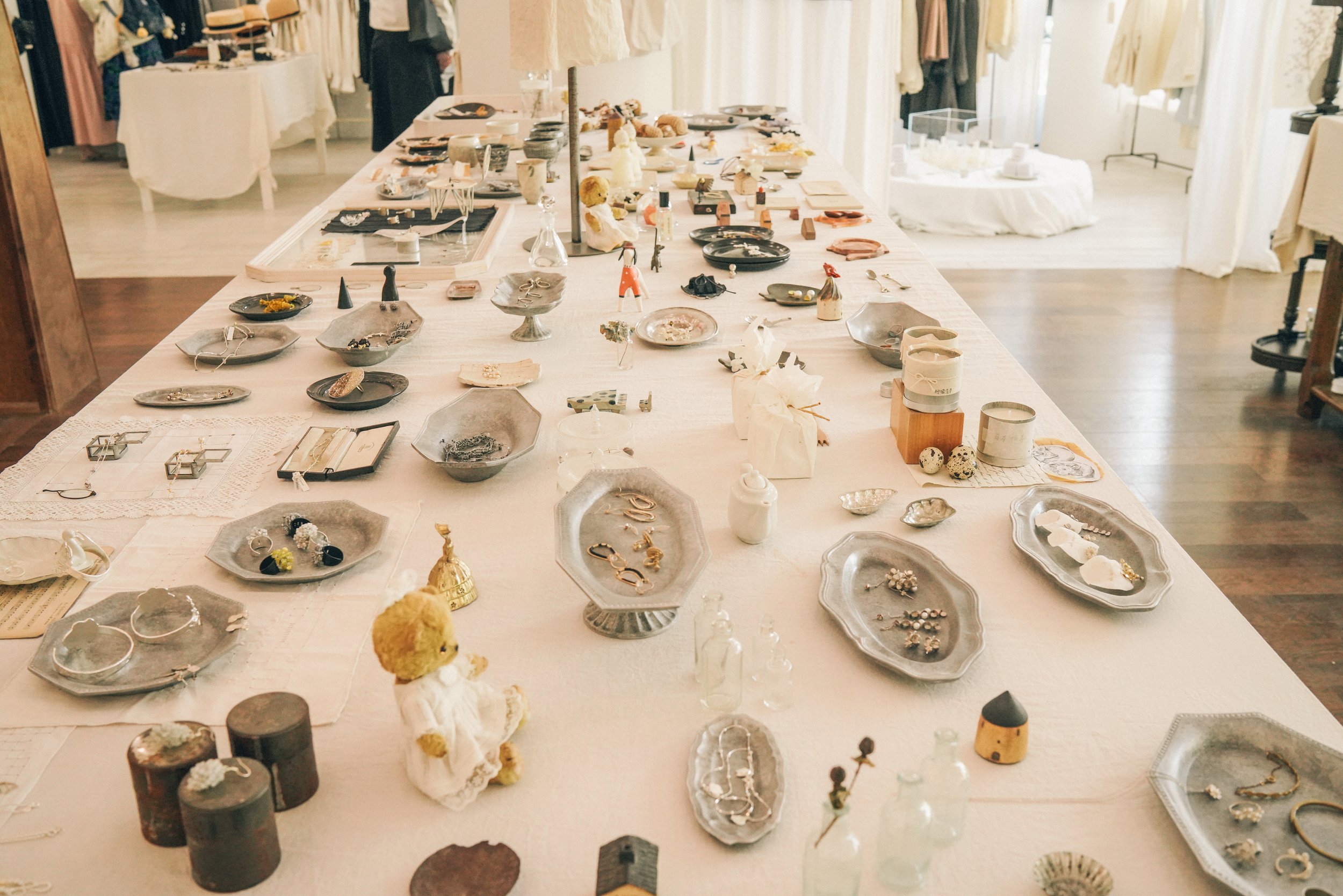
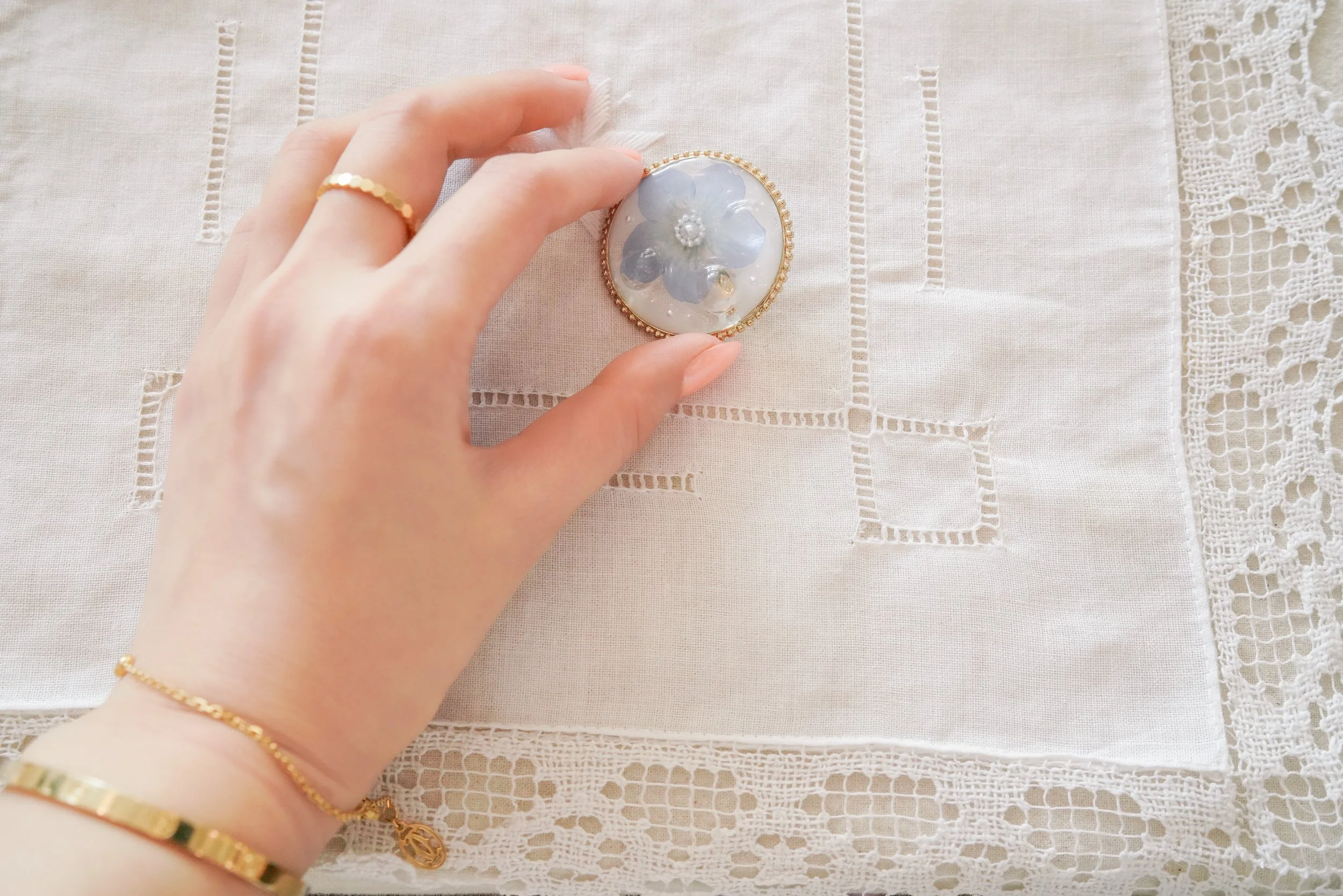
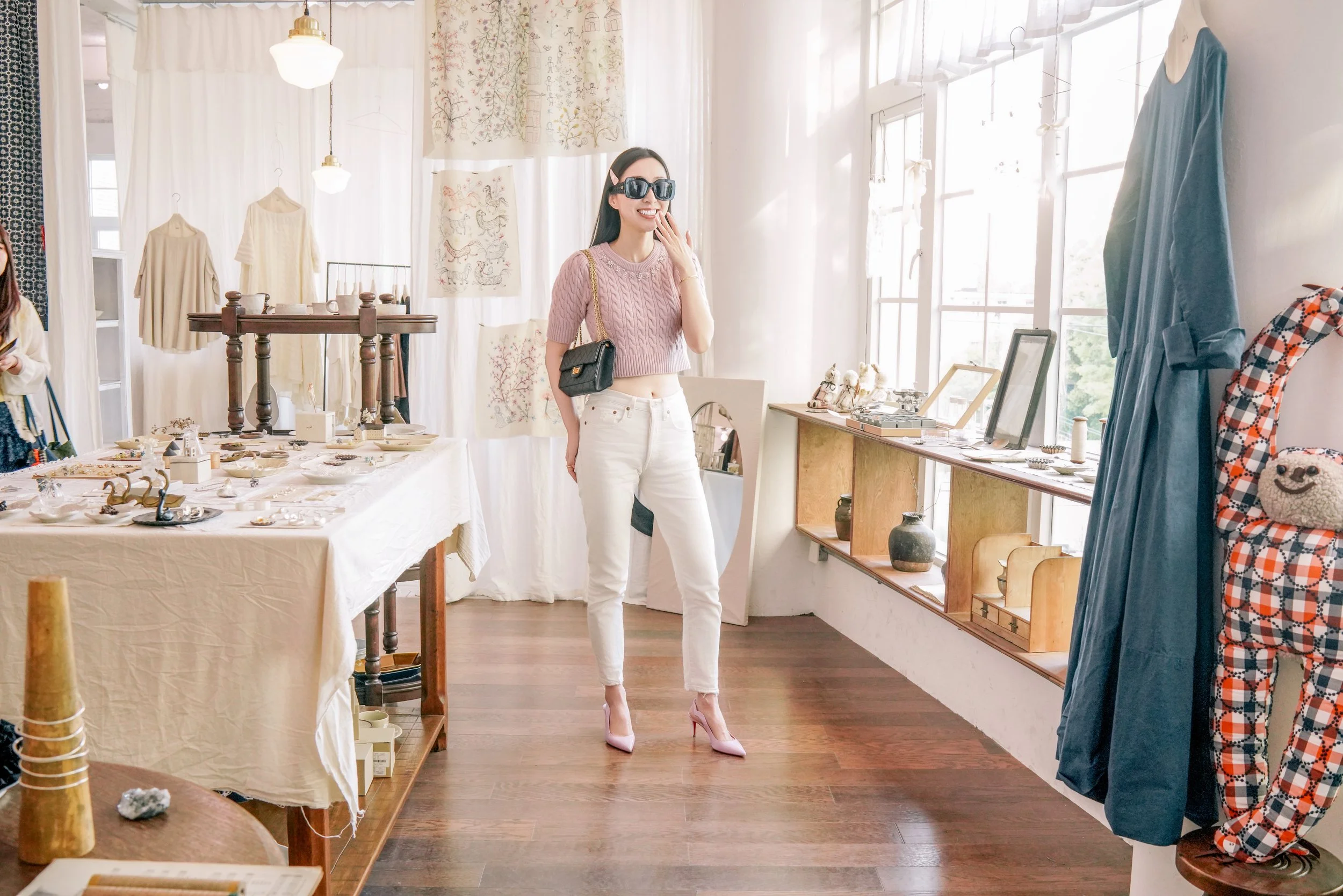
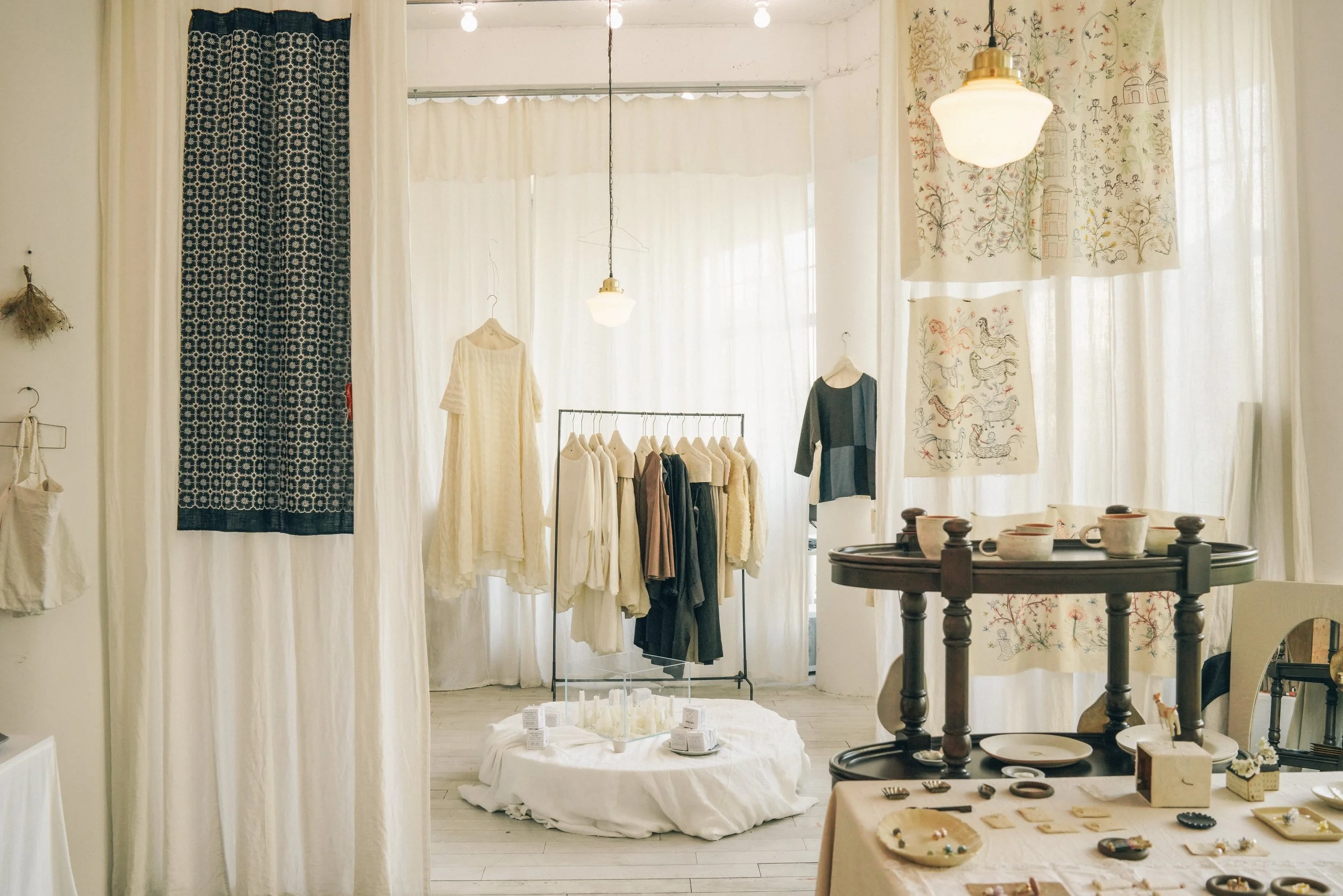
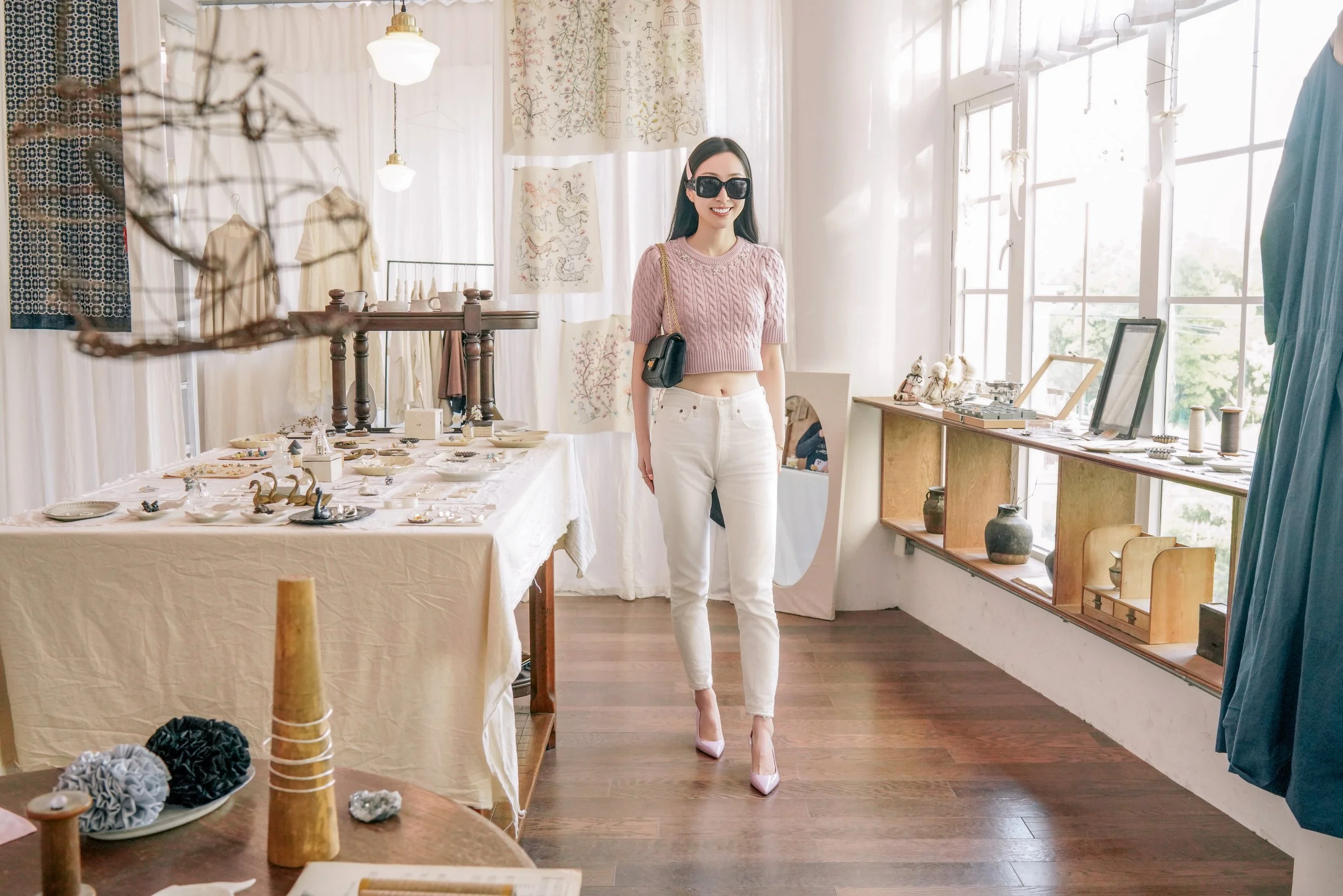
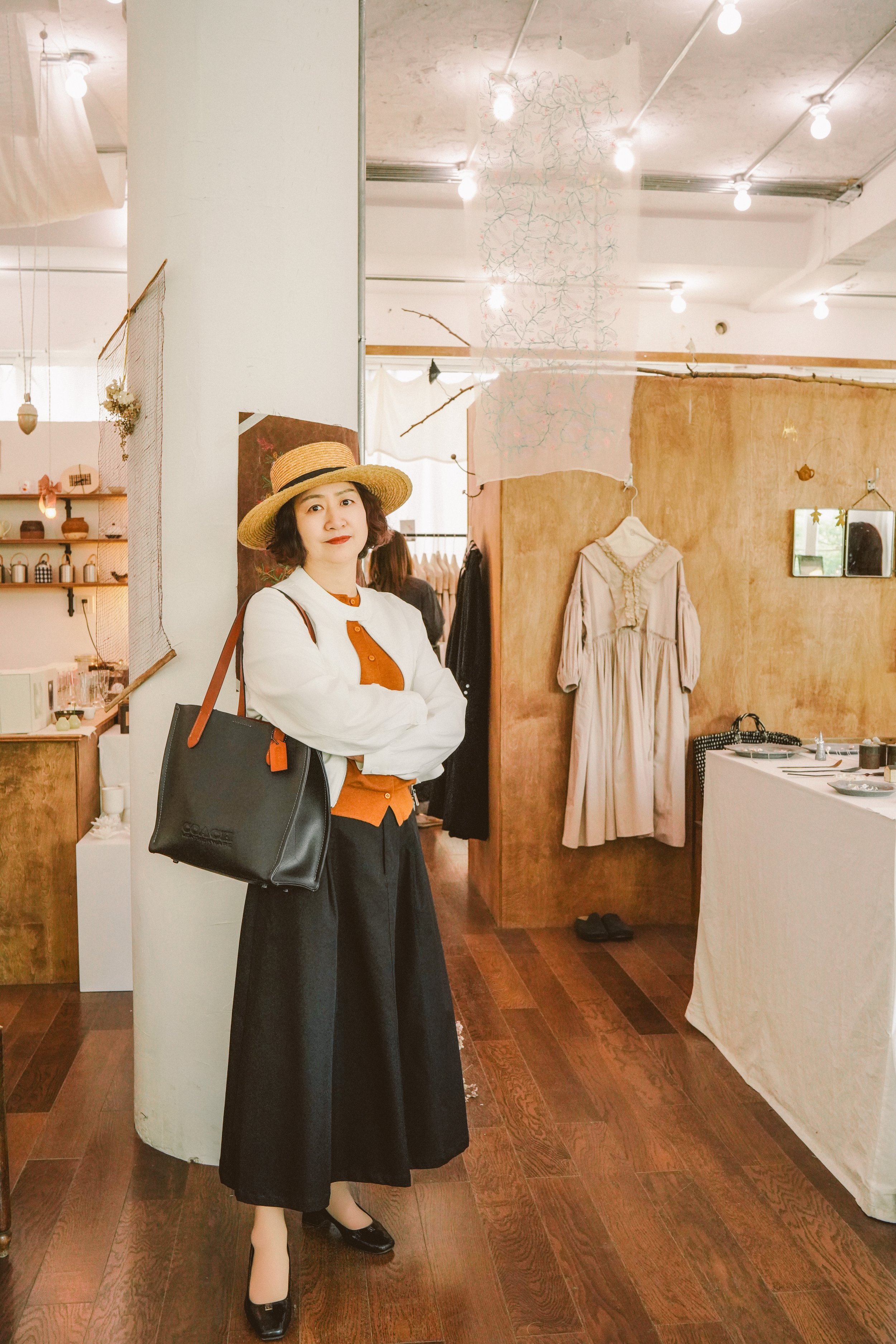
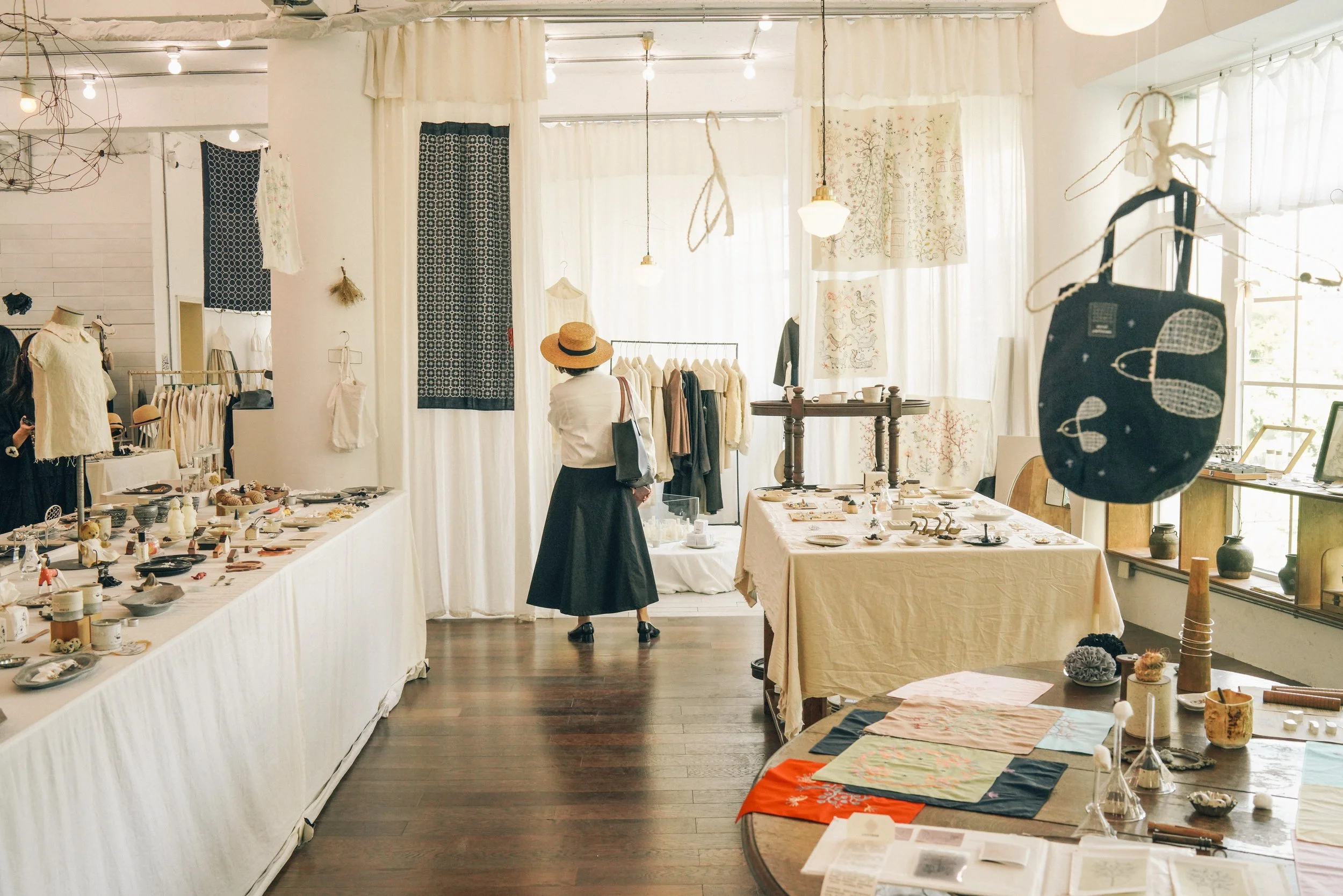
Hachi's selection is Japanese: cotton and linen garments from designer labels, clean in line and considered in proportion; handcrafted jewellery in silver or brass, restrained in form but rich in small detail. The spacing between displayed objects has been thought about. Nothing crowds, nothing floats. Things are placed the way you would place them at home, not the way a retailer would arrange them on a shelf.
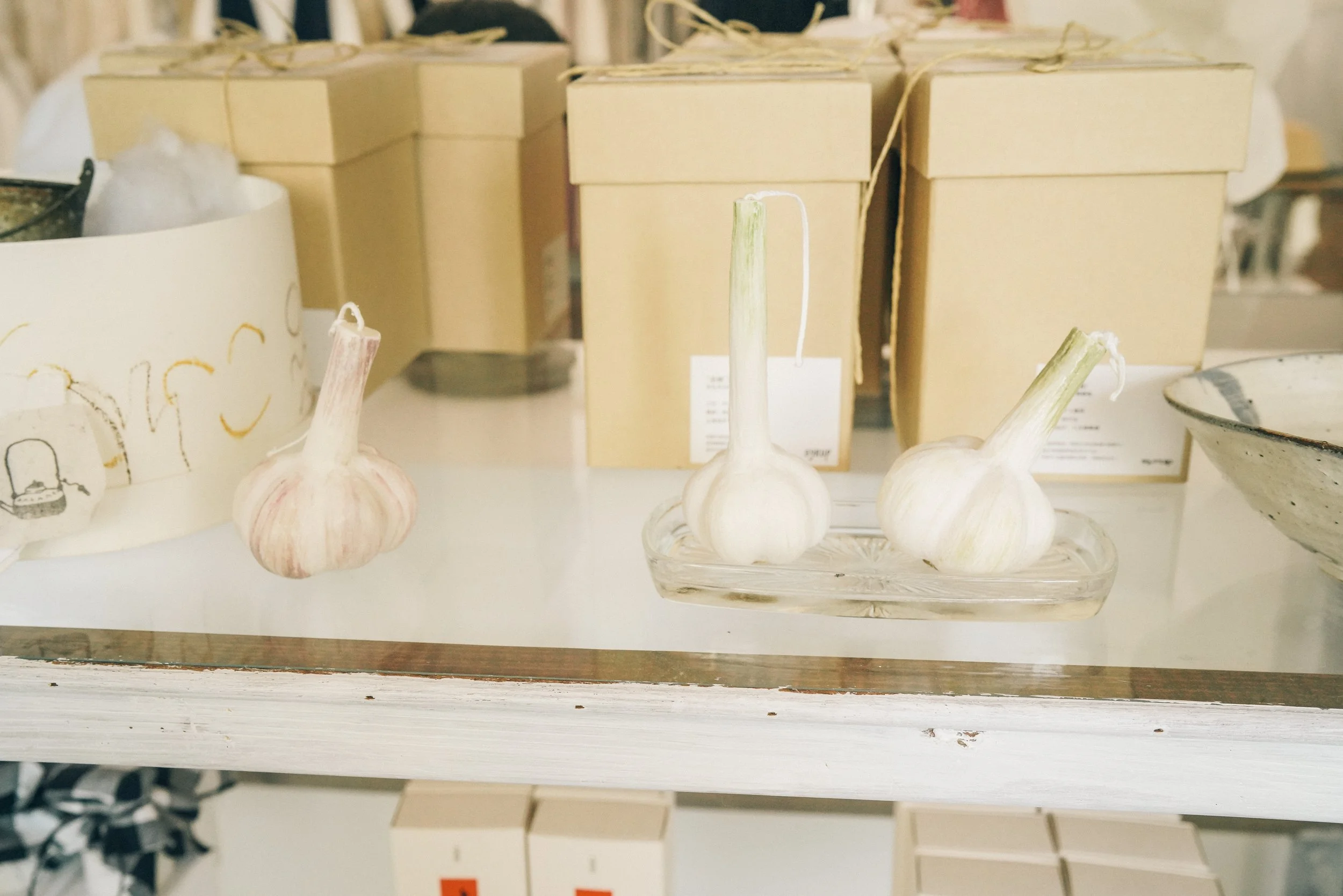
The piece I keep thinking about is a garlic-shaped incense holder.
At first glance it seems almost strange — garlic? — but when you pick it up and look closely, the curve closes so naturally, the glaze is so warm, you understand immediately: this is not being cute. This is taking a commonplace form seriously. That is exactly what makes Japanese design so compelling. It never decides that something is too ordinary to be worth making beautiful. All things can be the starting point for design.
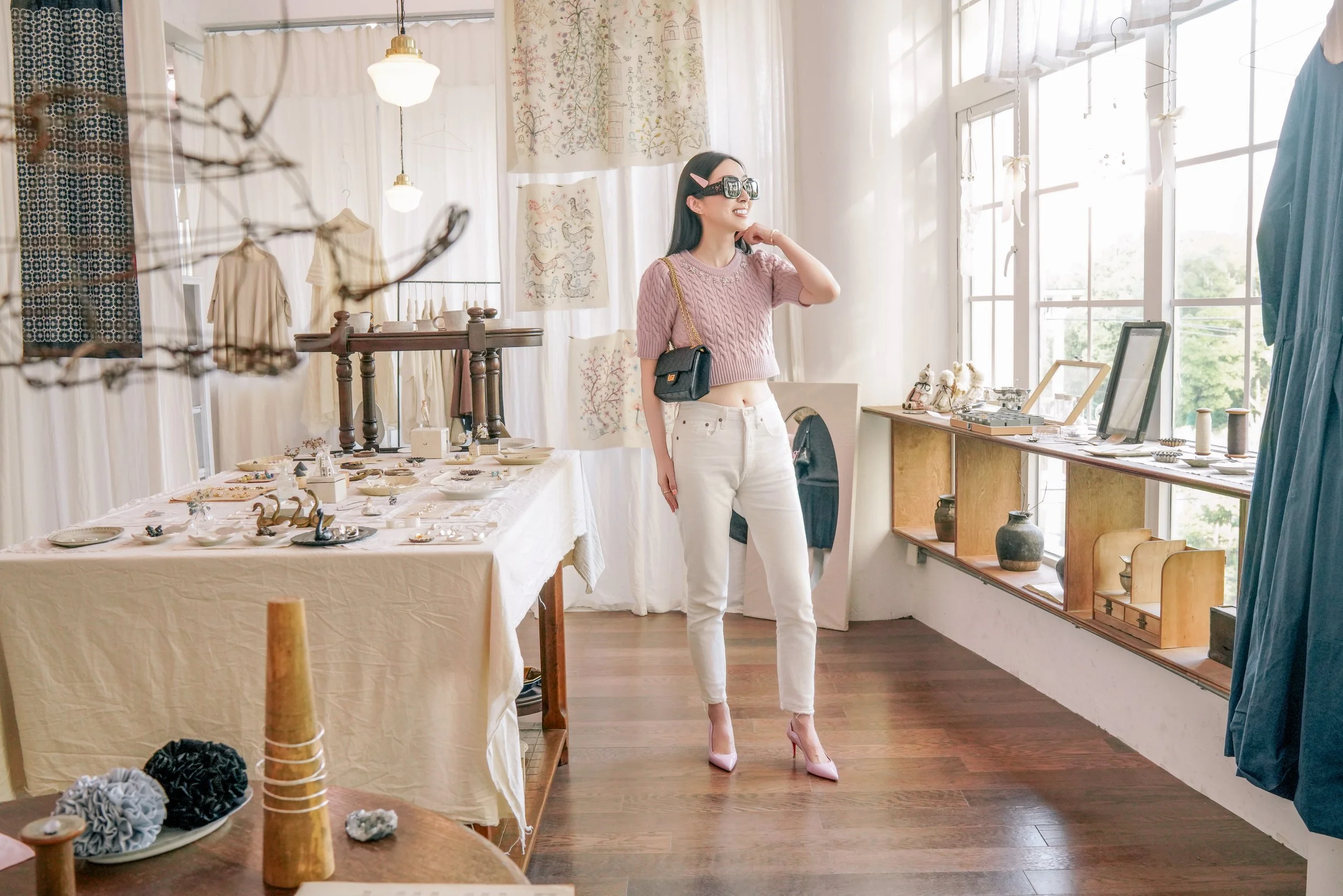
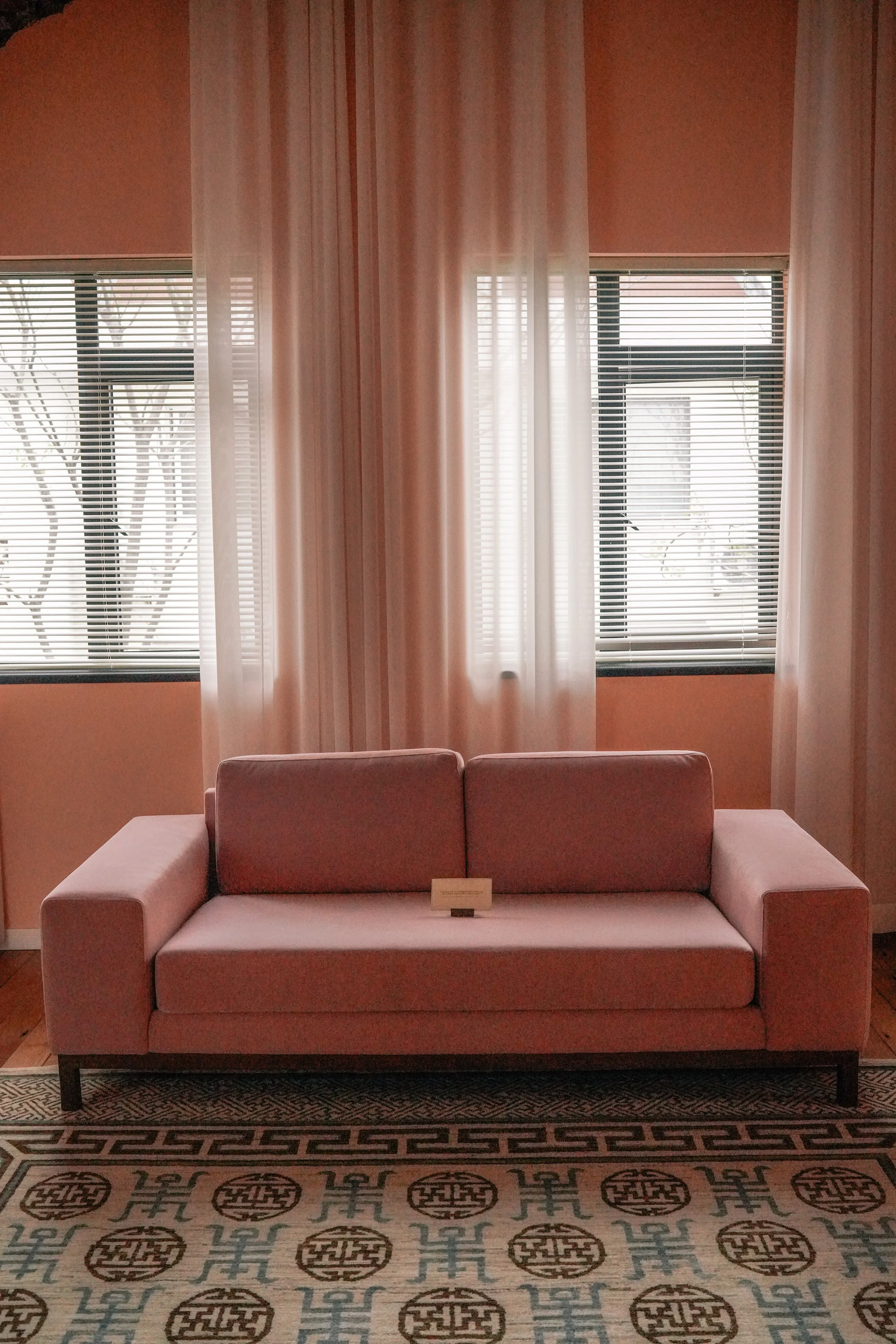
The large windows are another reason to linger. The curtains are embroidered with Japanese botanical patterns, so the light that comes through carries texture with it. Outside is the green of Shanghai's plane trees — the neighbourhood's constant presence — and through that window it looks like a painting borrowed on purpose. The Japanese precision inside, and the haipai street life outside, find each other across the glass in a way you do not quite expect.
The meeting between Japanese aesthetics and Shanghai has always felt natural. There is an unspoken kinship between the two cities: both value detail, both understand negative space, both hold an almost obstinate sense of what just right means. Hachi makes that kinship into the shape of a living room, and waits quietly for the people who recognise it to push open the door.
二、Hachi客厅|日式的克制,在梧桐树下展开
进Hachi客厅,先喝一杯茶。
不是你开口要的,是店员主动端来的。那一刻你意识到,这不是一家普通意义上的店——它更像是一个有人招待你的空间,恰好陈列了一些值得带走的东西。
Hachi的选品是日系的:设计师品牌的棉麻衣物,线条简洁;手工打造的首饰,银或黄铜,造型克制却细节丰富。每一件东西陈列的间距都是经过考量的,不拥挤,不稀疏,像是摆在家里的方式,而不是货架上的方式。
让我印象最深的,是一个大蒜形状的香薰摆件。乍一看有点错愕——大蒜?——但拿起来端详,弧线收得那么自然,釉色那么温润,你很快就明白了:它不是在"做可爱",而是在认真对待一个日常的形状。这正是日本设计最让人着迷的地方:它从不觉得什么东西太日常而不值得被美化。所有事物可以成为设计的起点。
大大的窗户是Hachi空间里另一个令人停留的理由。窗帘是日式花草刺绣,让光线穿进来时带了一层质感。窗外是上海的标配绿意,在这里却像是被特意借进来的一帧画——室内的日式精致,与室外的海派街景,在那扇窗前构成了某种意想不到的对话。
日本美学与上海的相遇,从来不是陌生的。两座城市之间,审美上有一种难以言说的亲缘:都珍视细节,都讲究留白,都对"恰好"这个尺度有近乎执拗的追求。Hachi把这种亲缘具体化成了一间客厅的样子,安静地等待懂它的人推门进来。
III. Habiter — A European Past Life, Hidden in a Lane
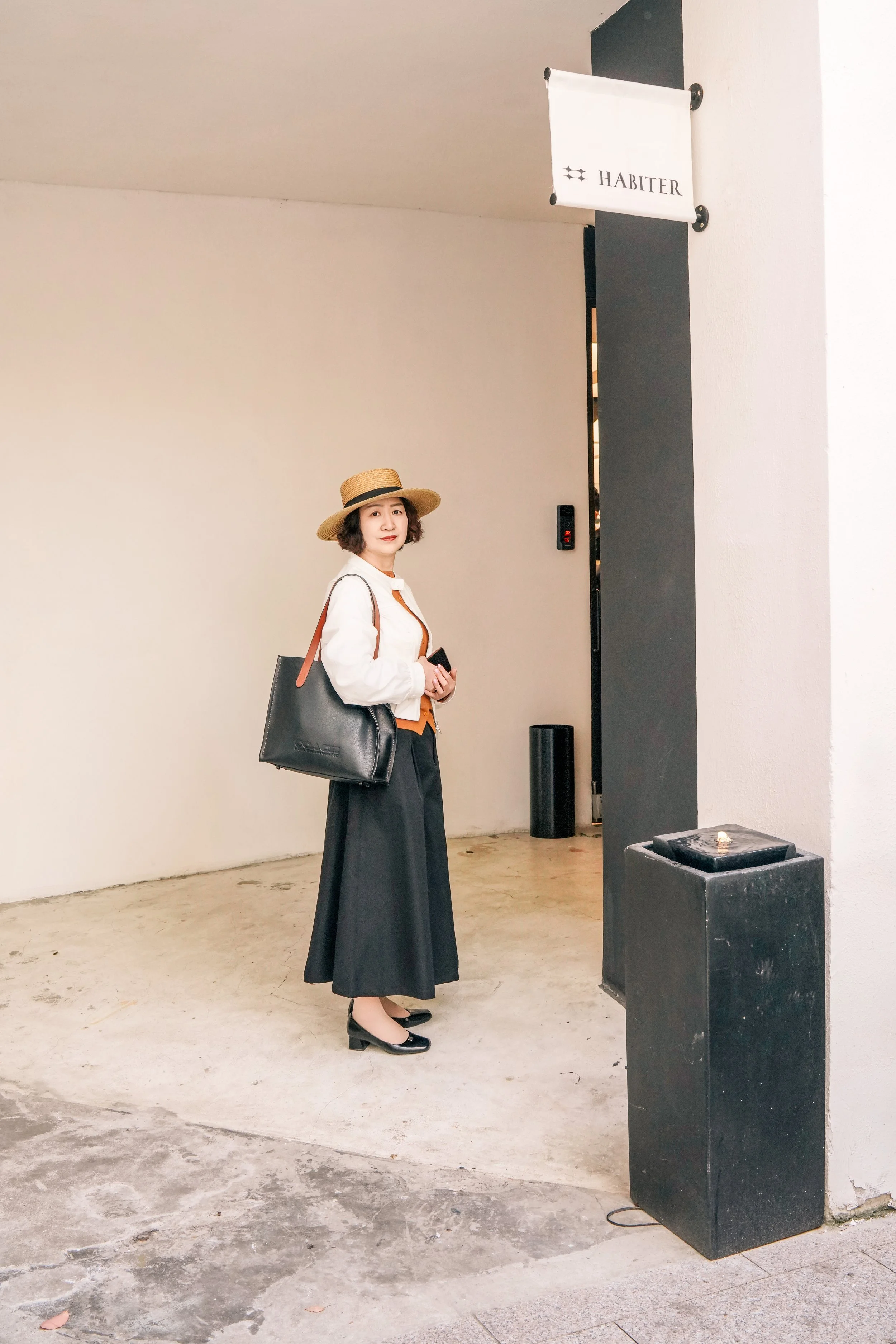
Habiter is not easy to find.
It is tucked deep in a lane inside one of Shanghai's old garden villa districts, with no prominent sign and no directed path leading you in. Getting there requires a little patience and a willingness to look.
But once you are inside, the feeling justifies it.
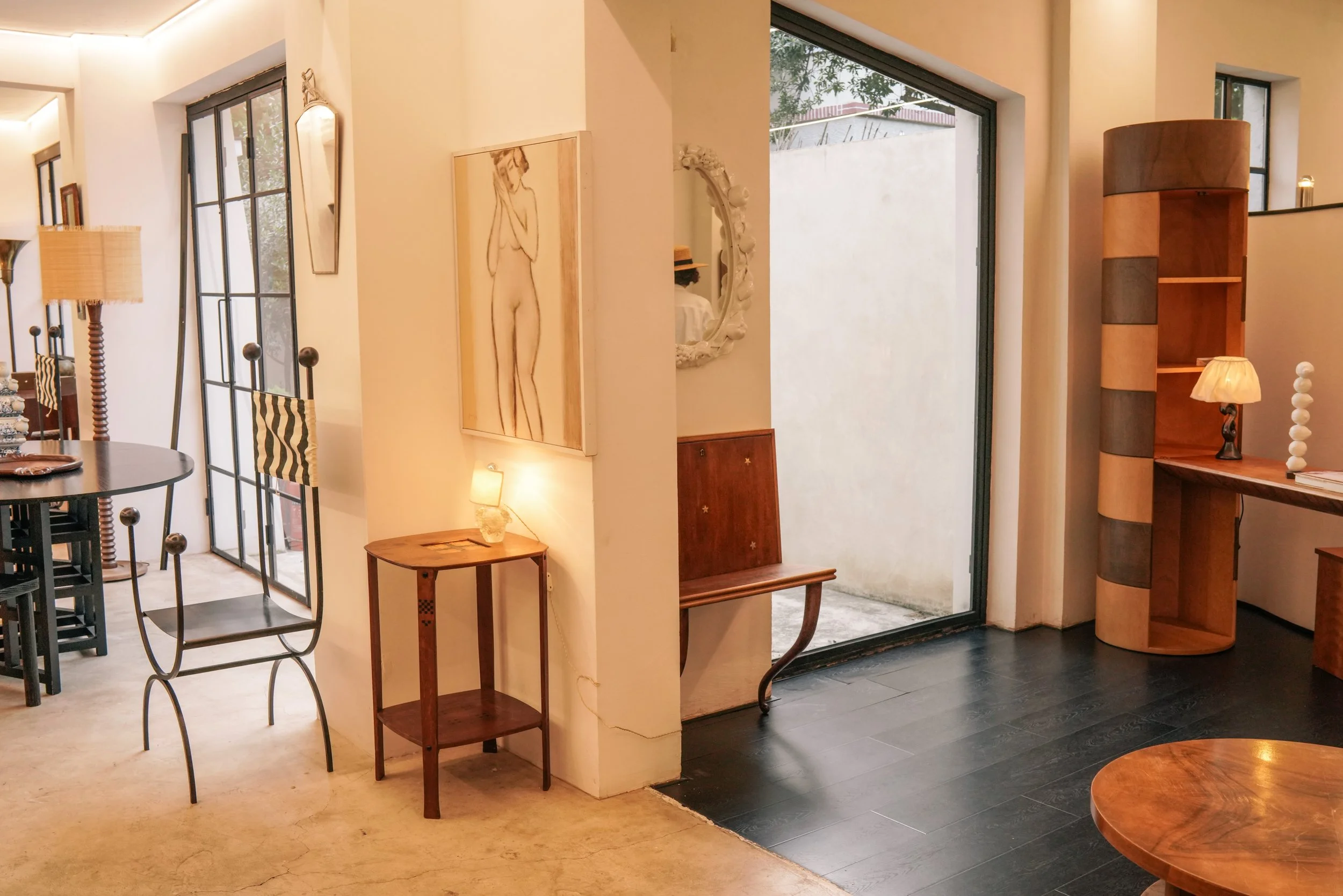
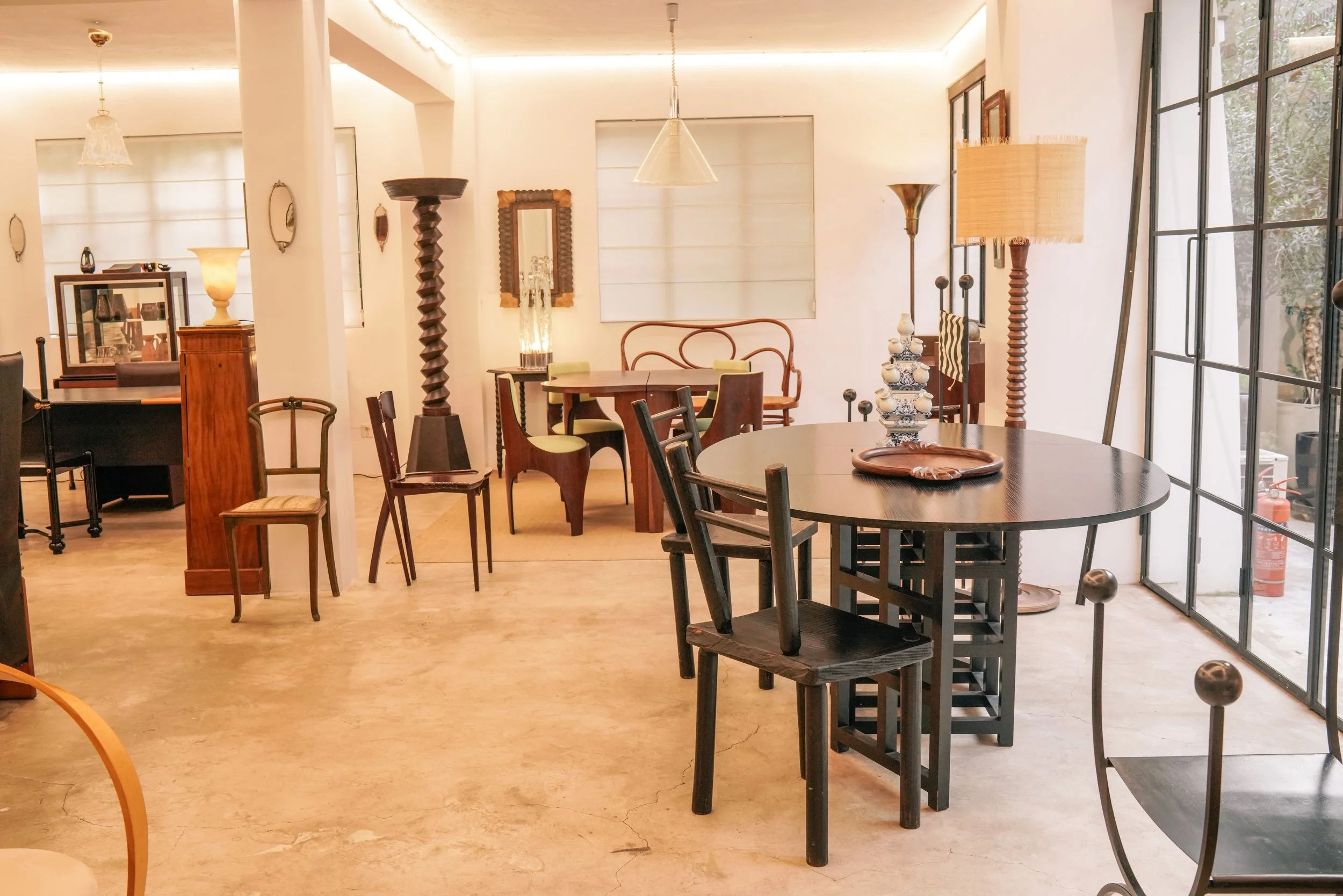
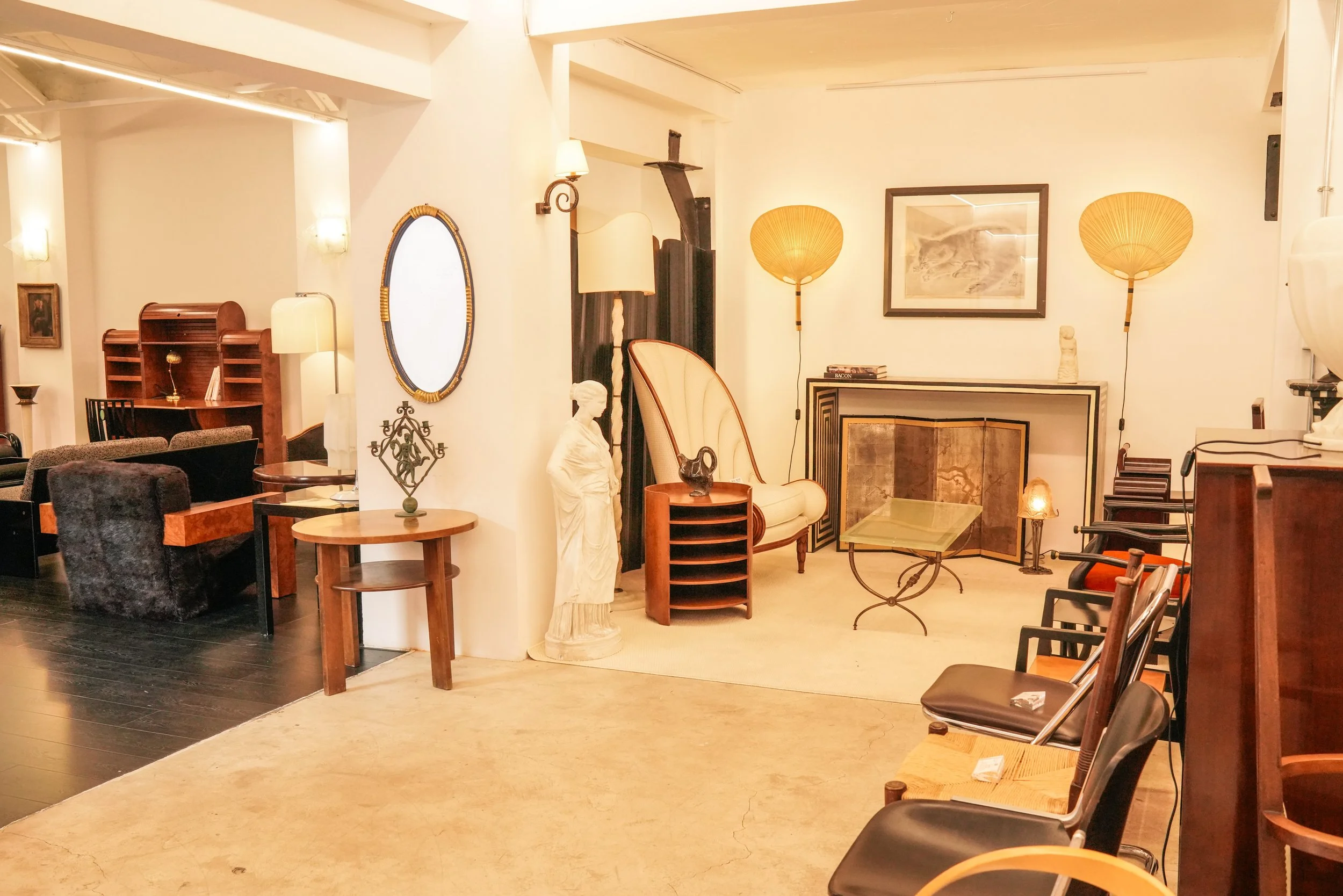
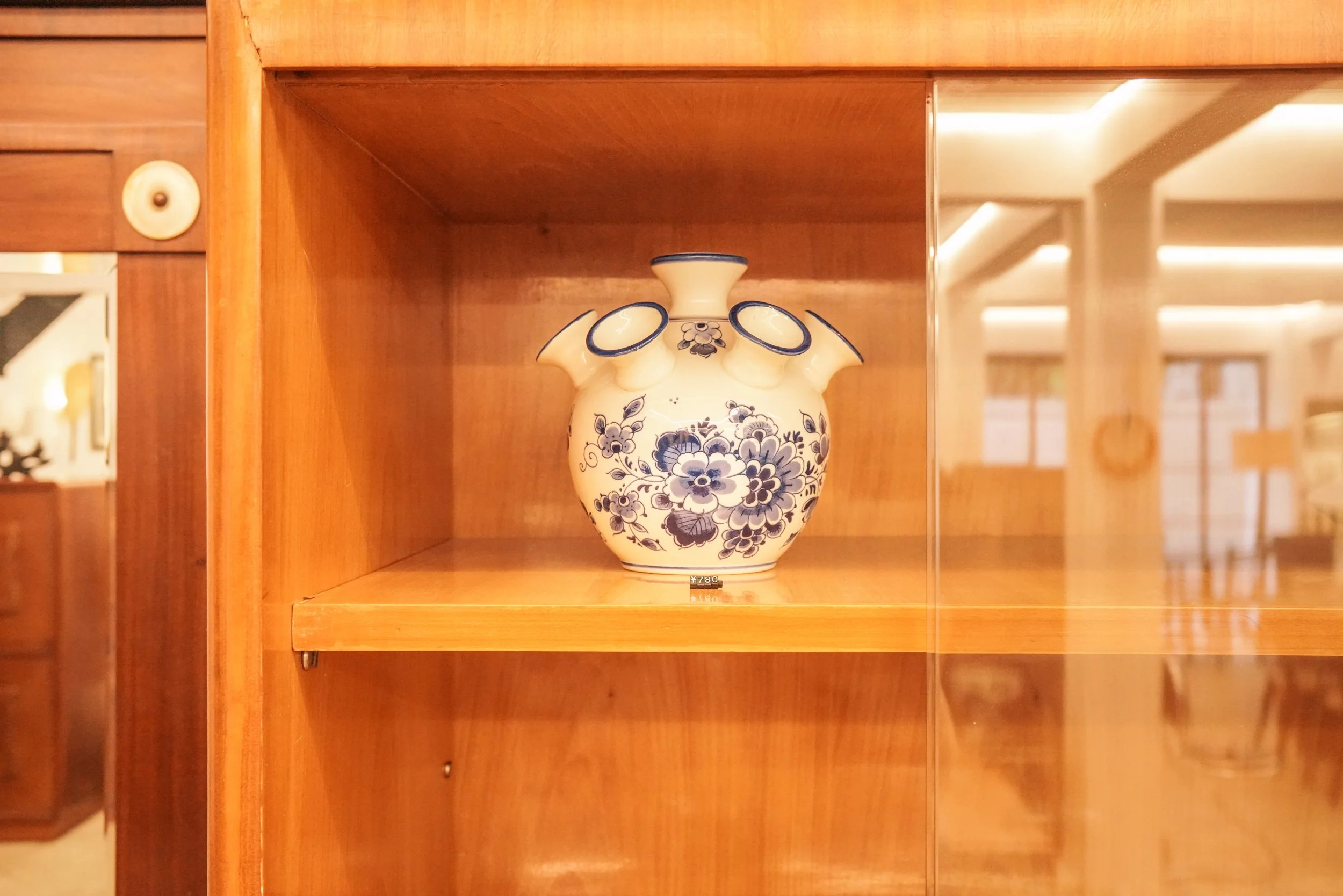
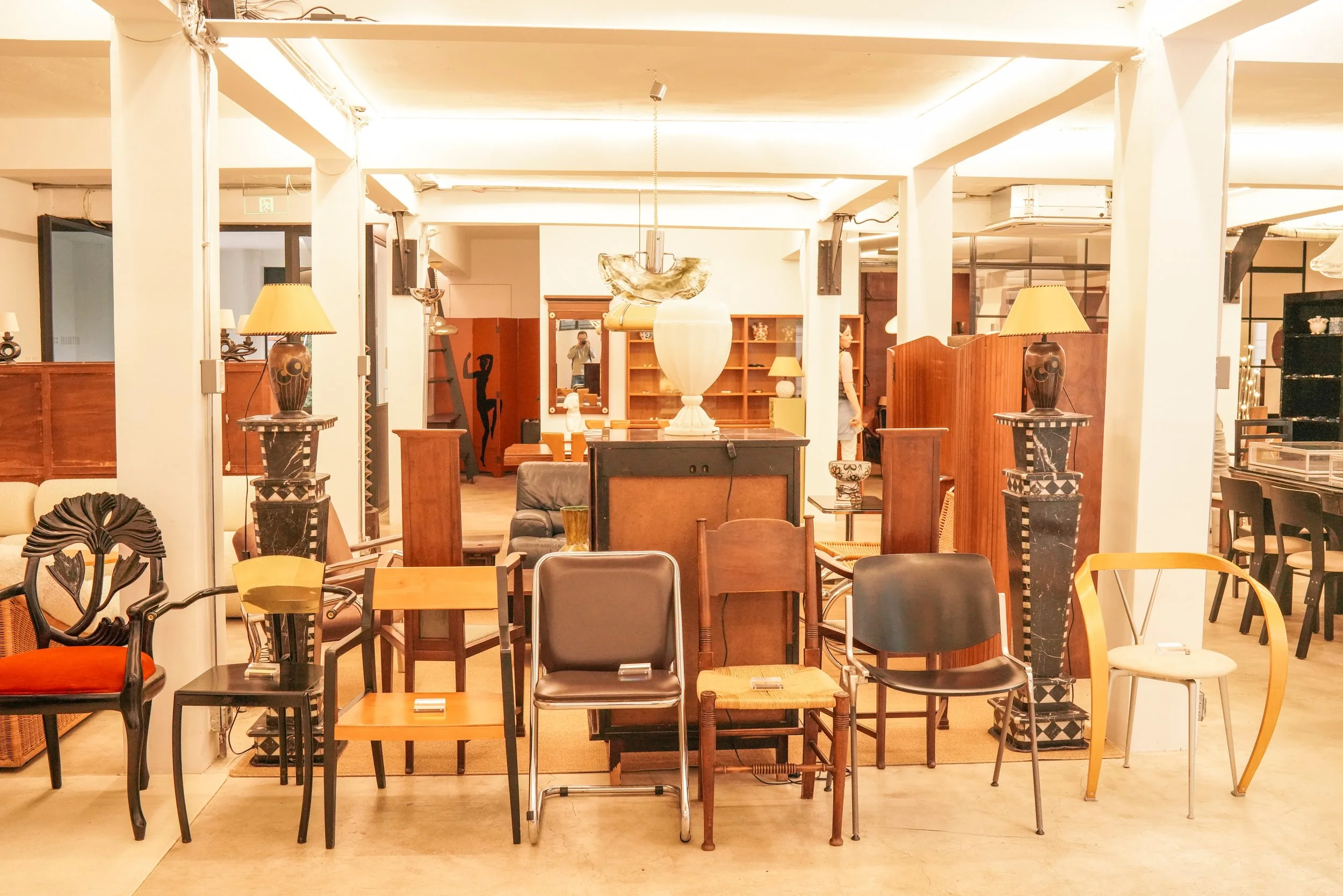
This is a vintage home store. The centrepiece is European second-hand: antique furniture, vintage textiles, lamps with unusual forms, and a selection of niche jewellery. What these things share is not a style, but the evidence of a life genuinely lived around them. Not artificially aged, but genuinely marked by time. A vase from a French family's dining table. A lamp from a corner of a Nordic flat. Passed through how many hands, nobody knows and now here, in a quiet Shanghai lane.
Old things carry something new things cannot: the possibility of a story. You do not know who sat in the chair. You only know it was made well enough to survive decades, well enough to eventually reach you. Take it home and you become the next chapter.
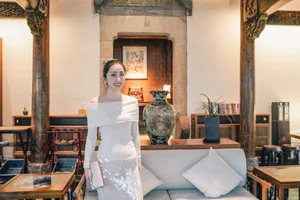
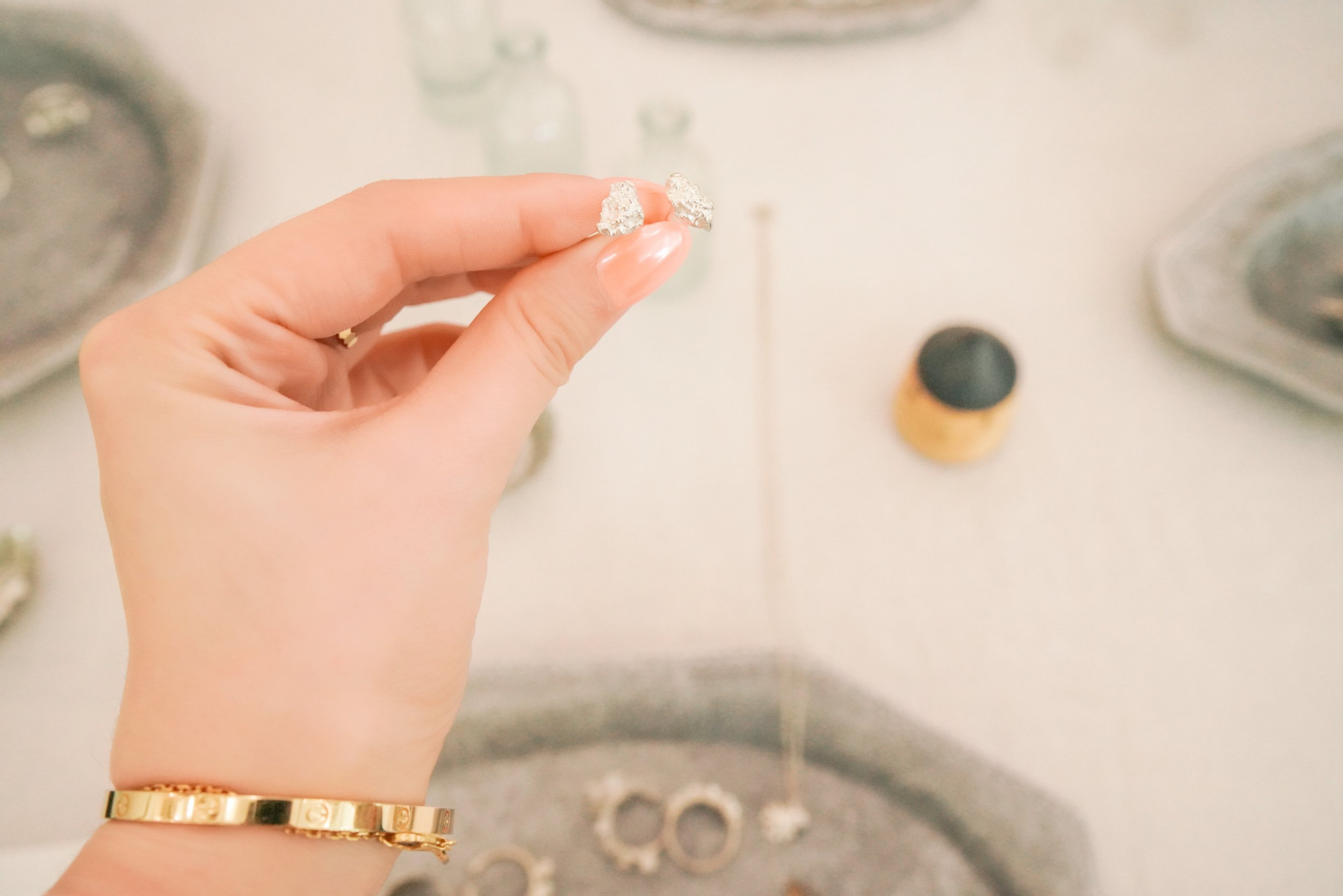
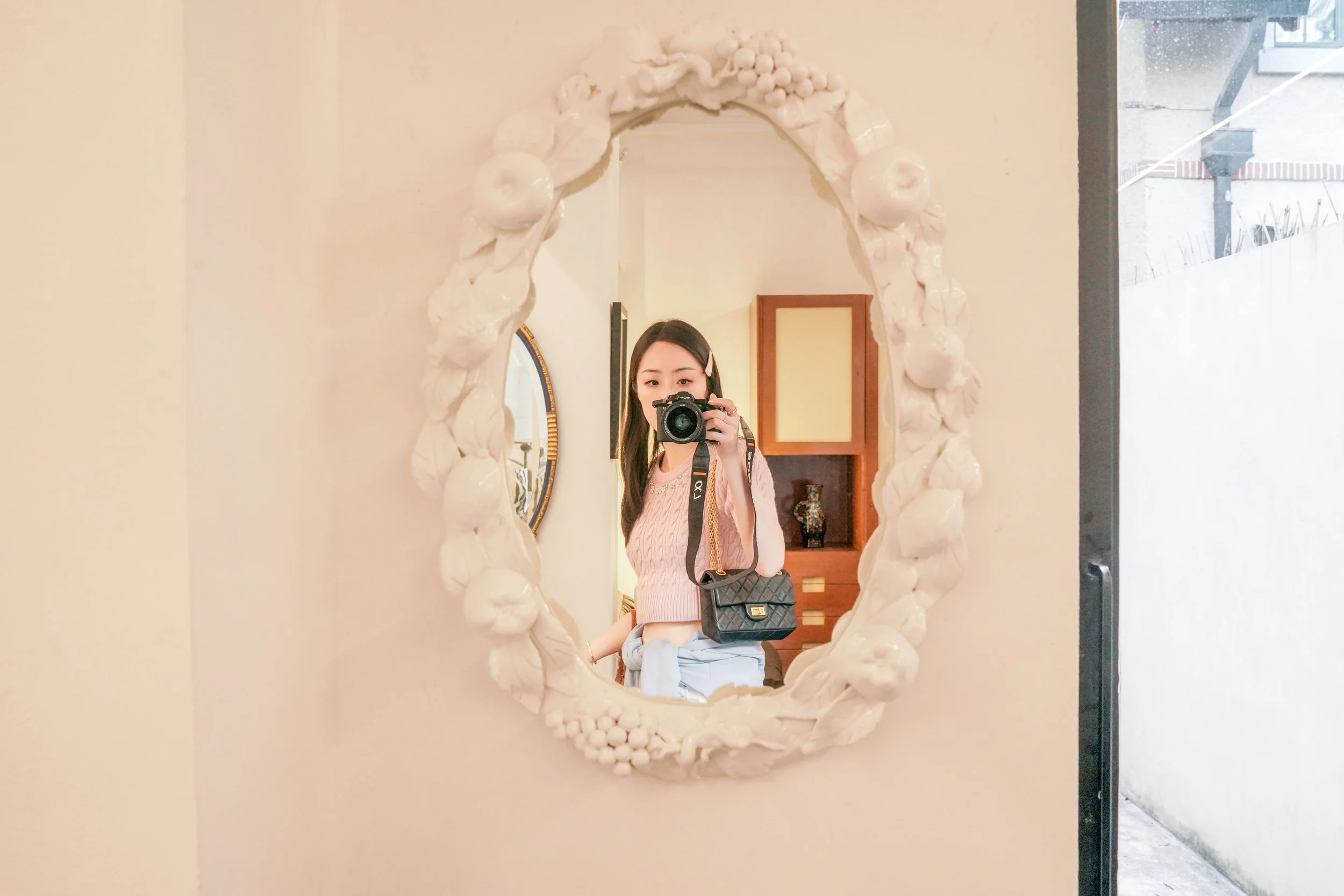
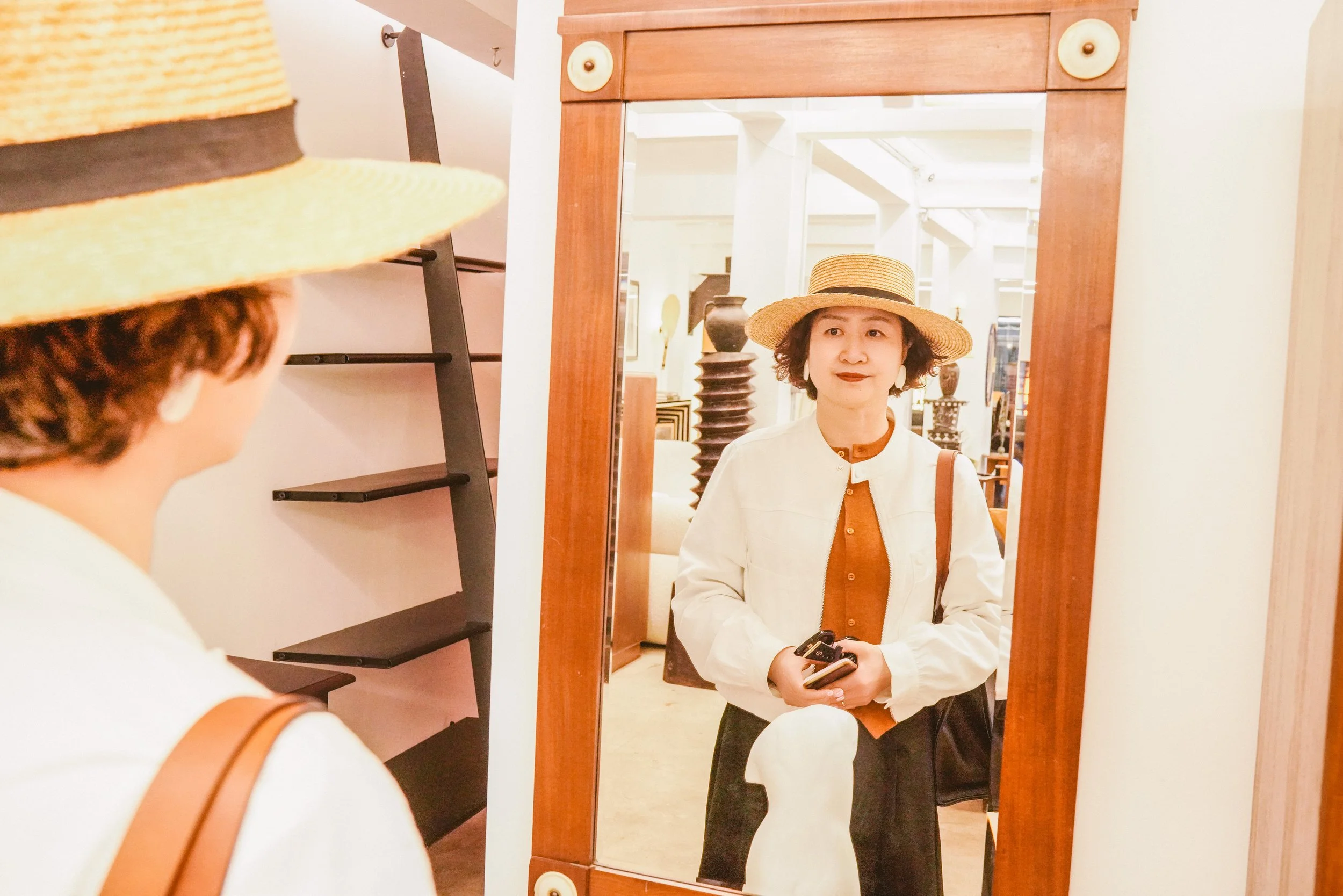
We spent a long time in the jewellery section. My mother picked up a pair of white clip-on earrings and held them up in the mirror . It was an oval shape, quietly fashionable. She looked good in them.
In that moment Habiter stopped being just a space and became something else: a specific afternoon, a specific person, a specific piece of old things, meeting in a quiet lane in Shanghai.
三、Habiter|藏进巷子里的欧洲旧生活
Habiter不好找。
它藏在上海老洋房别墅区的巷子深处,没有显眼的招牌,没有刻意引导的动线。你要走进去,要有一点探索的耐心。
但走进去之后,那种感觉是值得的。
这是一间中古家居店,主角是来自欧洲的旧物:中古家具、vintage布艺、造型特别的灯具,以及一些小众首饰。这些东西的共同气质是:不是"做旧"出来的,而是真实地经历过时间——某个法国家庭桌上的花瓶,某个北欧公寓角落里的台灯,不知辗转了几手,最后落在了上海这条巷子里。
旧物有一种新物没有的东西:故事的可能性。你不知道这把椅子坐过谁,你只知道它被做得很好,好到被保留了几十年,好到最终来到了你面前。带它回家,你成为它故事里的新一章。
我们在首饰区停了很久。妈妈拿起一副白色的耳夹,对着镜子试戴,椭圆形的设计,非常时髦。
那一刻Habiter对我来说不再只是一个空间,而是一个具体的下午,一个具体的人,一件具体的旧物,在上海某条安静的巷子里相遇。

Persian, Japanese, European.
Three aesthetics from three entirely different civilisations, each finding a home in the same city, each finding the people who understand them. That fact alone is one of the most remarkable things about Shanghai.
When people talk about haipai culture, they often mean the architecture on the Bund, the cut of a qipao, the flavour of Shanghainese home cooking. But the real core of haipai is an open aesthetic disposition, not fixed, not exclusive, trusting that beauty can be felt across languages and nationalities, willing to let the best things from very different corners of the world exist here at the same time, and to let something new grow from that.
Zamani, Hachi and Habiter are not anomalies in Shanghai. They are what Shanghai is made of.
This city has always been this way: standing in the East, facing the whole world, with its door open.
Zamani、Hachi、Habiter——它们不是上海的异类,它们是上海的本色。
来自波斯的、日本的、欧洲的三种不同文明的美学,在同一座城市找到了栖息地,找到了懂它们的人。这件事本身,就是上海最了不起的地方之一。
很多人谈海派文化,谈的是外滩的建筑、旗袍的剪裁、本帮菜的口味。但海派真正的内核,是一种开放的审美态度——它不固守,不排外,它相信美是可以跨越语言和国籍被感受到的,它愿意让世界上不同角落的好东西在这里同时存在,并在这片土壤里长出新的东西来。
这座城市向来如此:以一种超然的姿态,站在东方,向整个世界敞开。