Slow Water, New Leaves: A Spring Week in Hangzhou
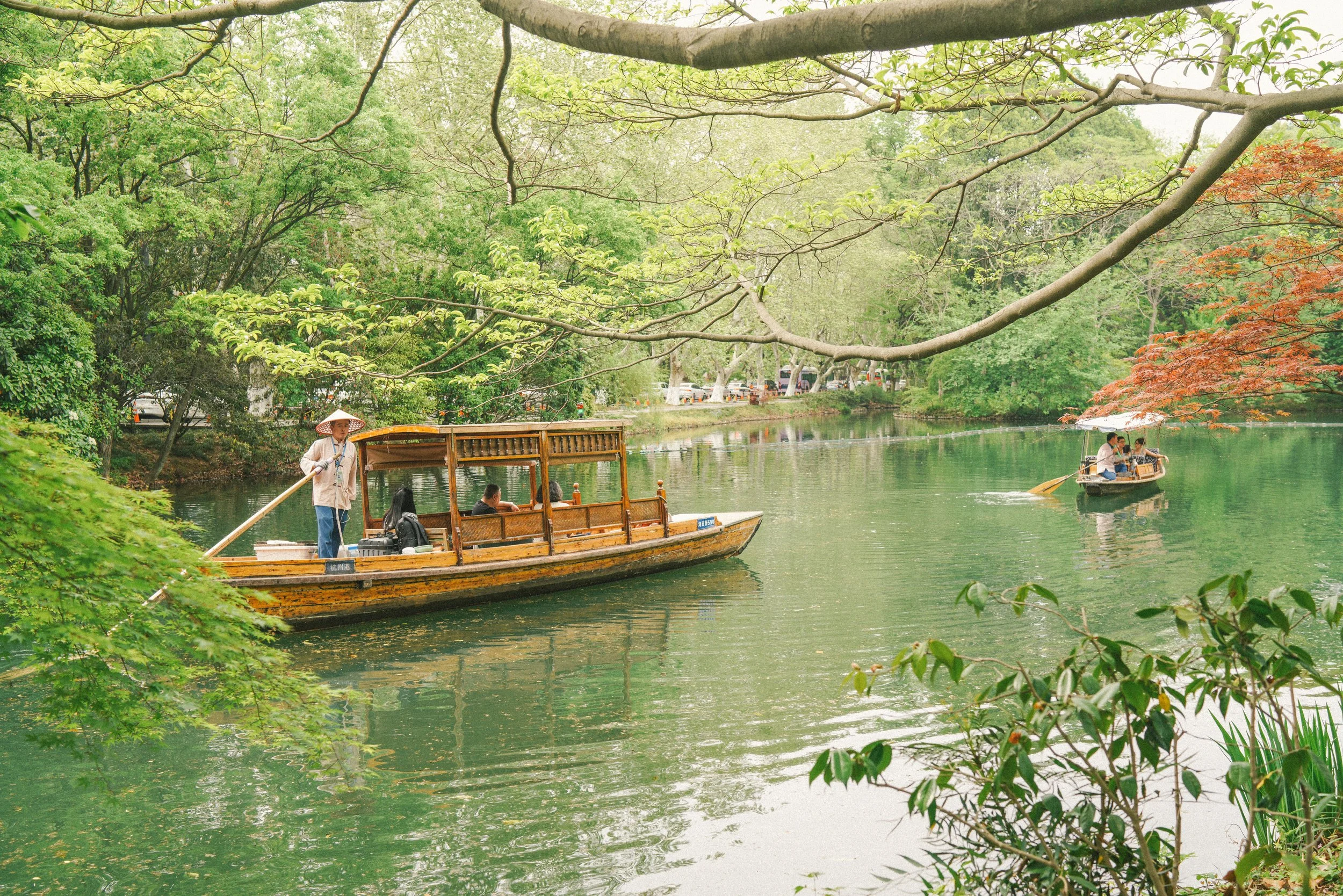
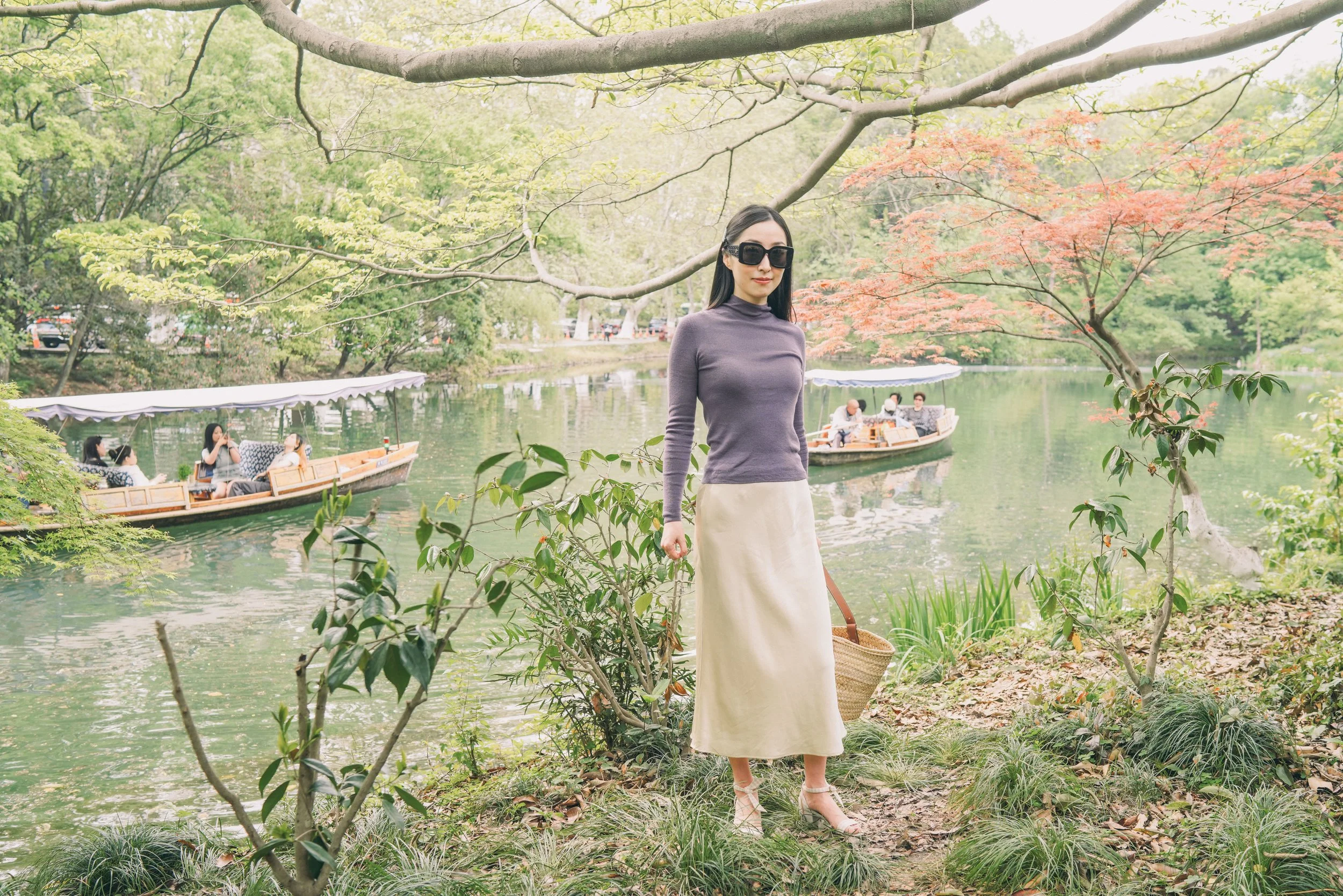
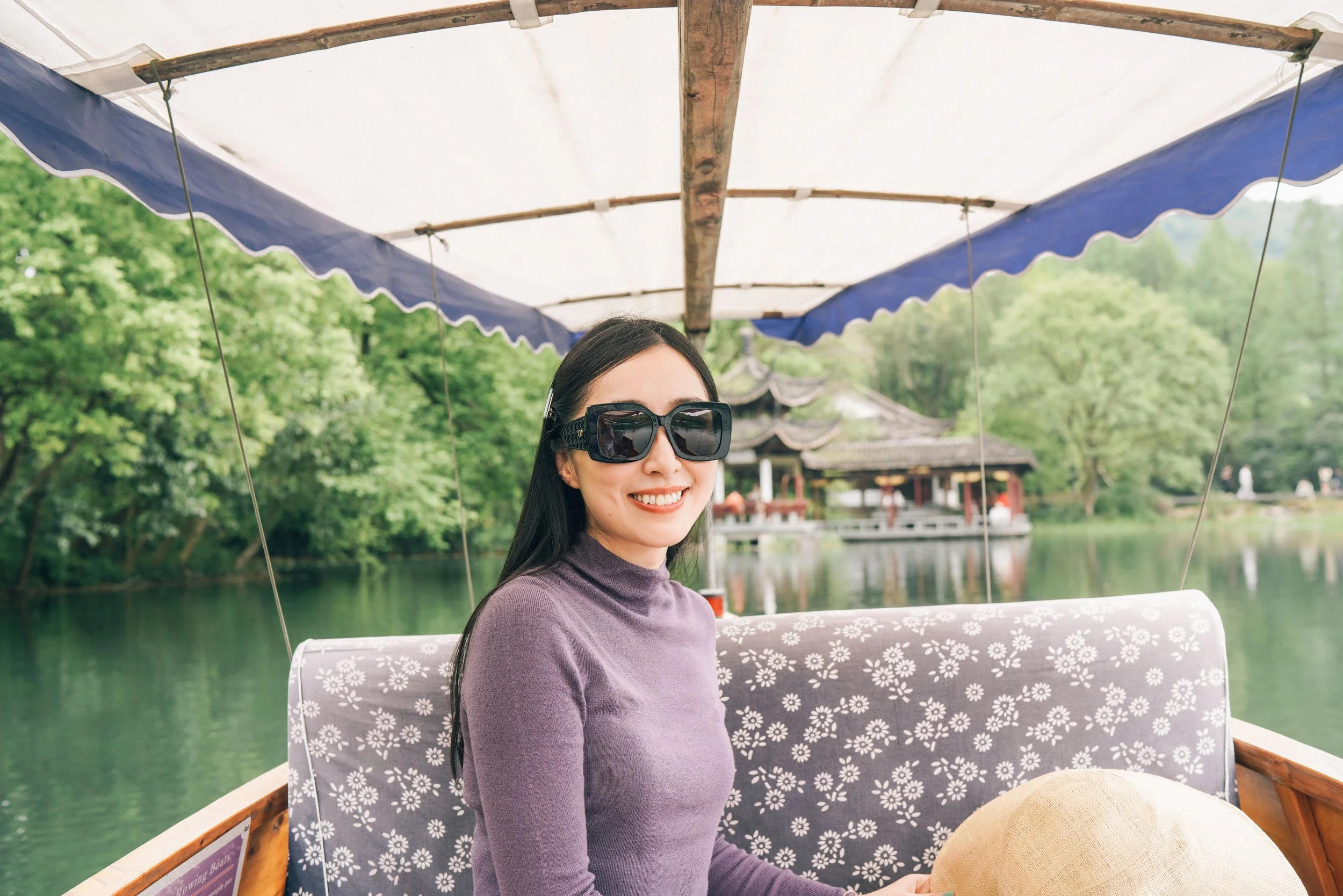
Rowing boats on the West Lake
Water, Tea, and the Most Alive Moment of the Year
Hangzhou in spring is not something you take in with your eyes. It asks you to receive it with your whole body, and to slow down, and actually fall into the rhythm of the city. For me, two things made that happen: stepping into a hand-rowed boat on West Lake, and picking tea leaves by hand in the hills above Meijiawu(梅家坞)Village, just before Qingming.
Part I · On the Water
The world turned its volume down
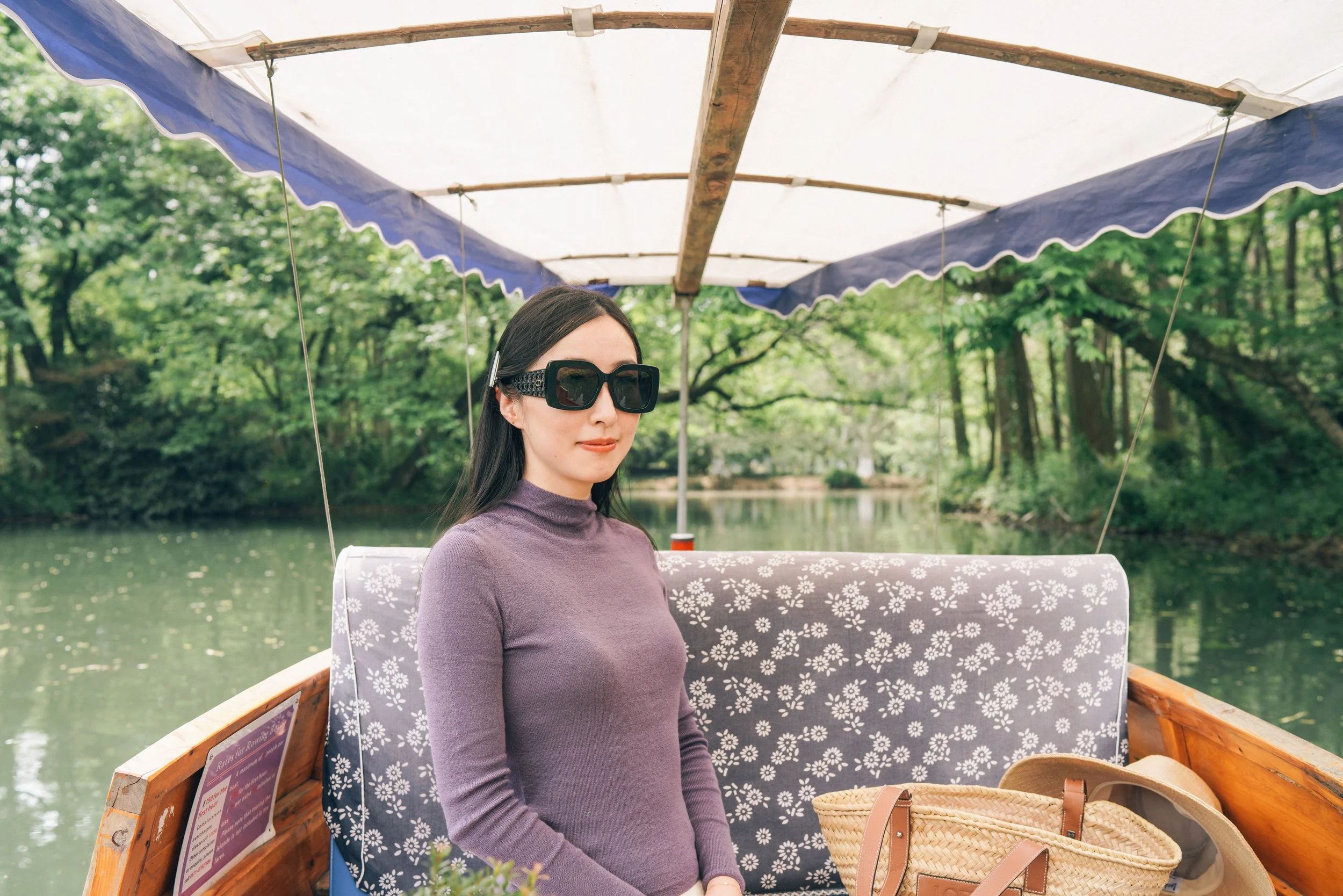
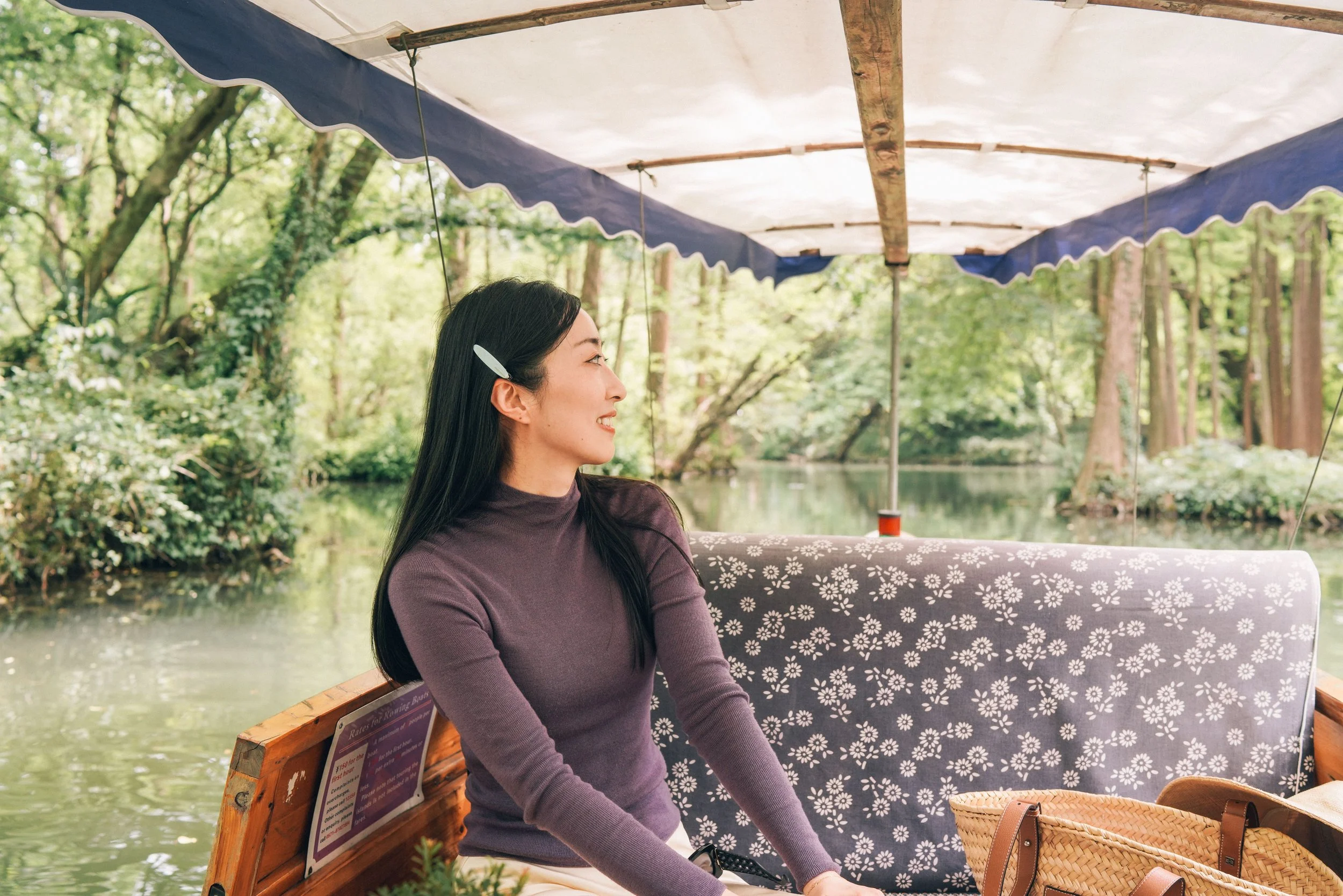
The moment I stepped into the rowing boat on West Lake, a strange quiet rose up from somewhere beneath my feet. No engine noise, no traffic. Just water and wind, and a sense that time had gone soft around the green edges.
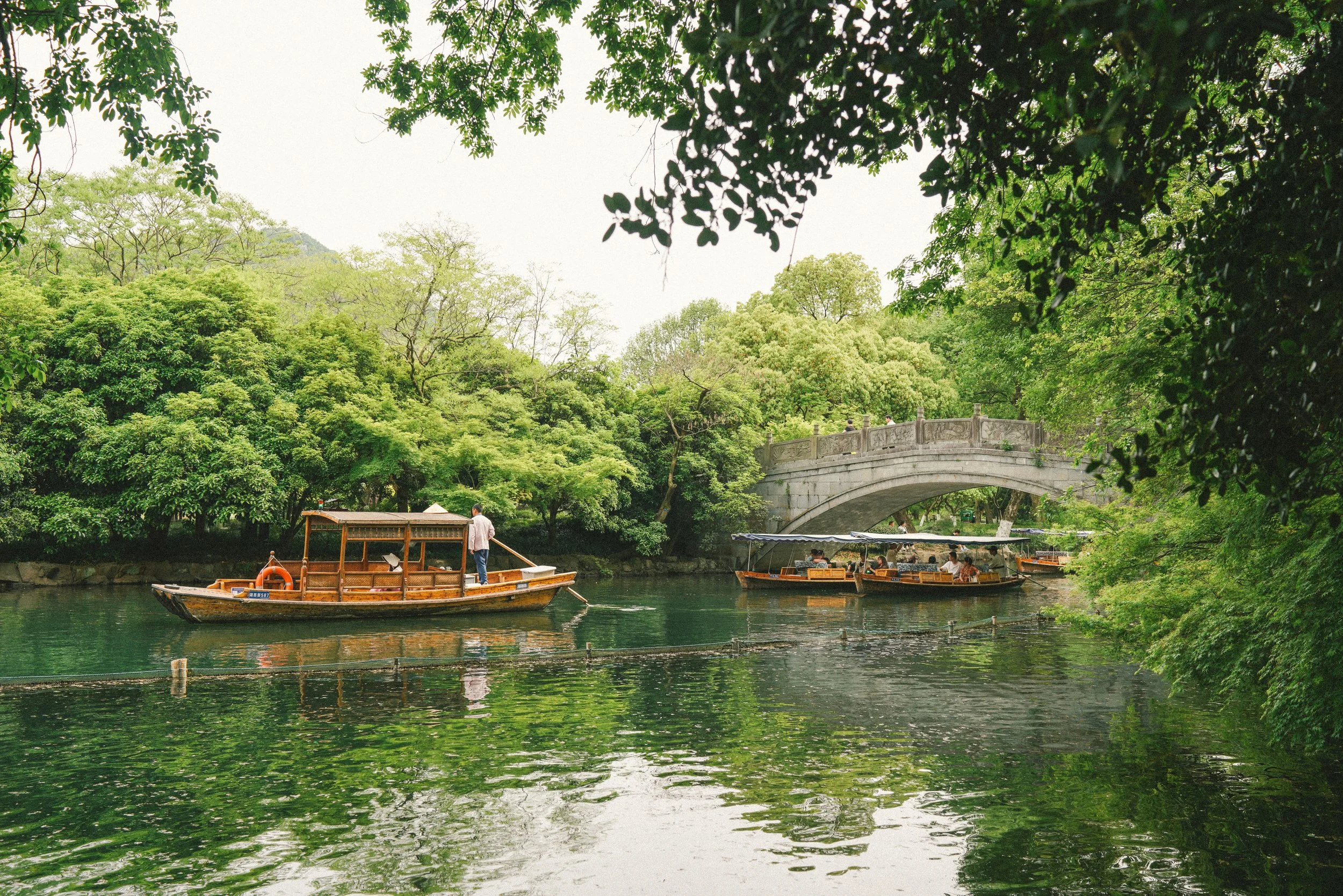
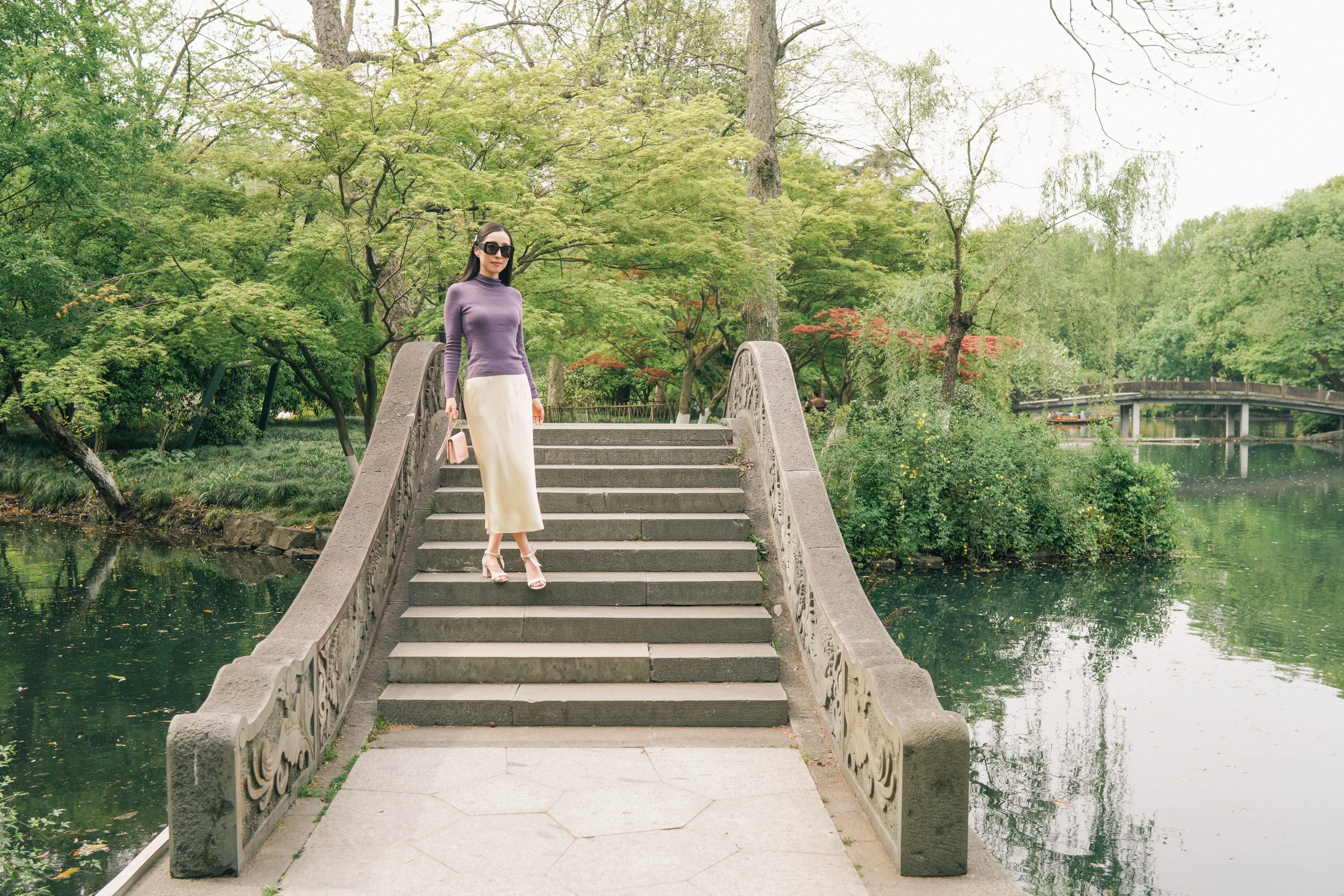
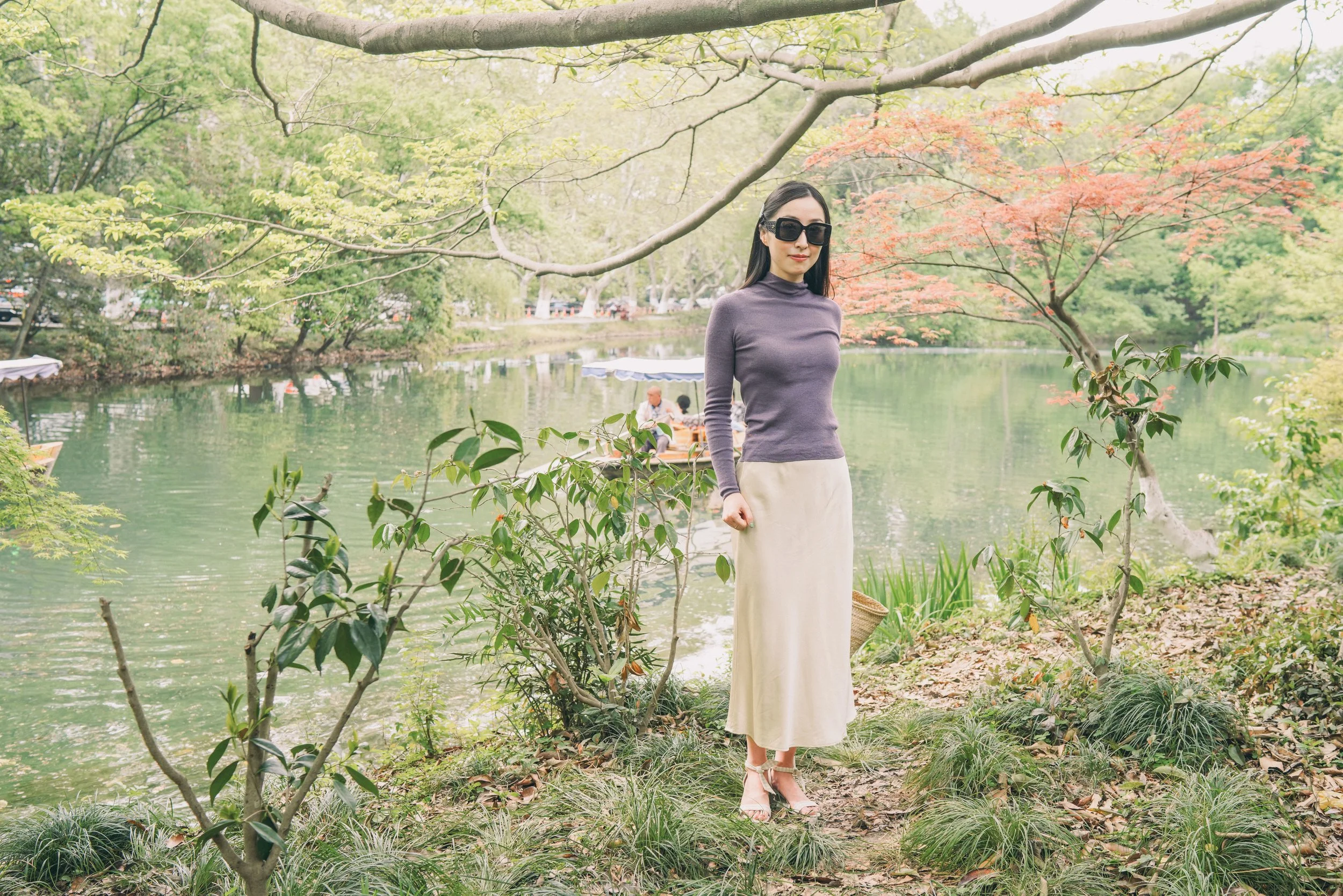
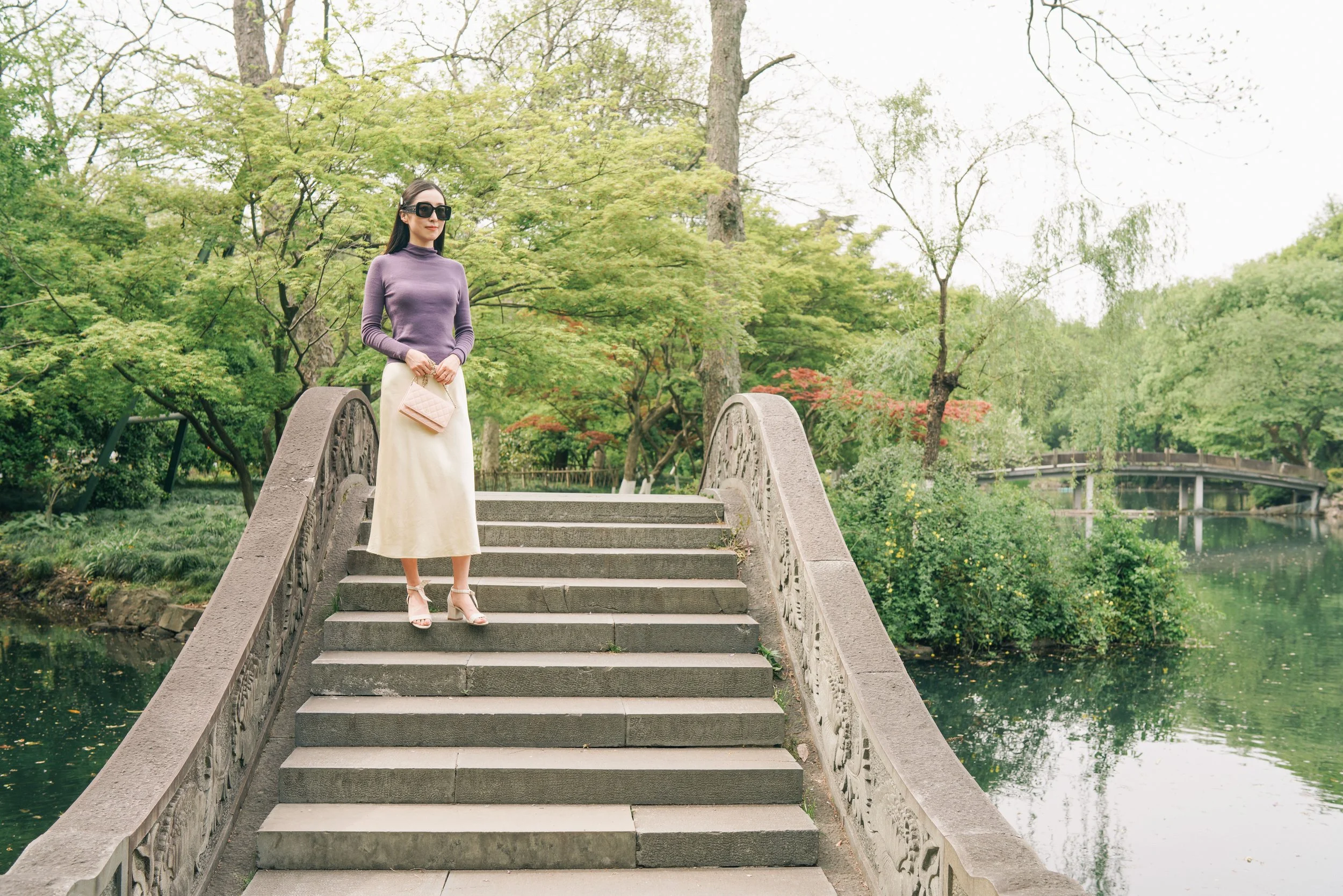
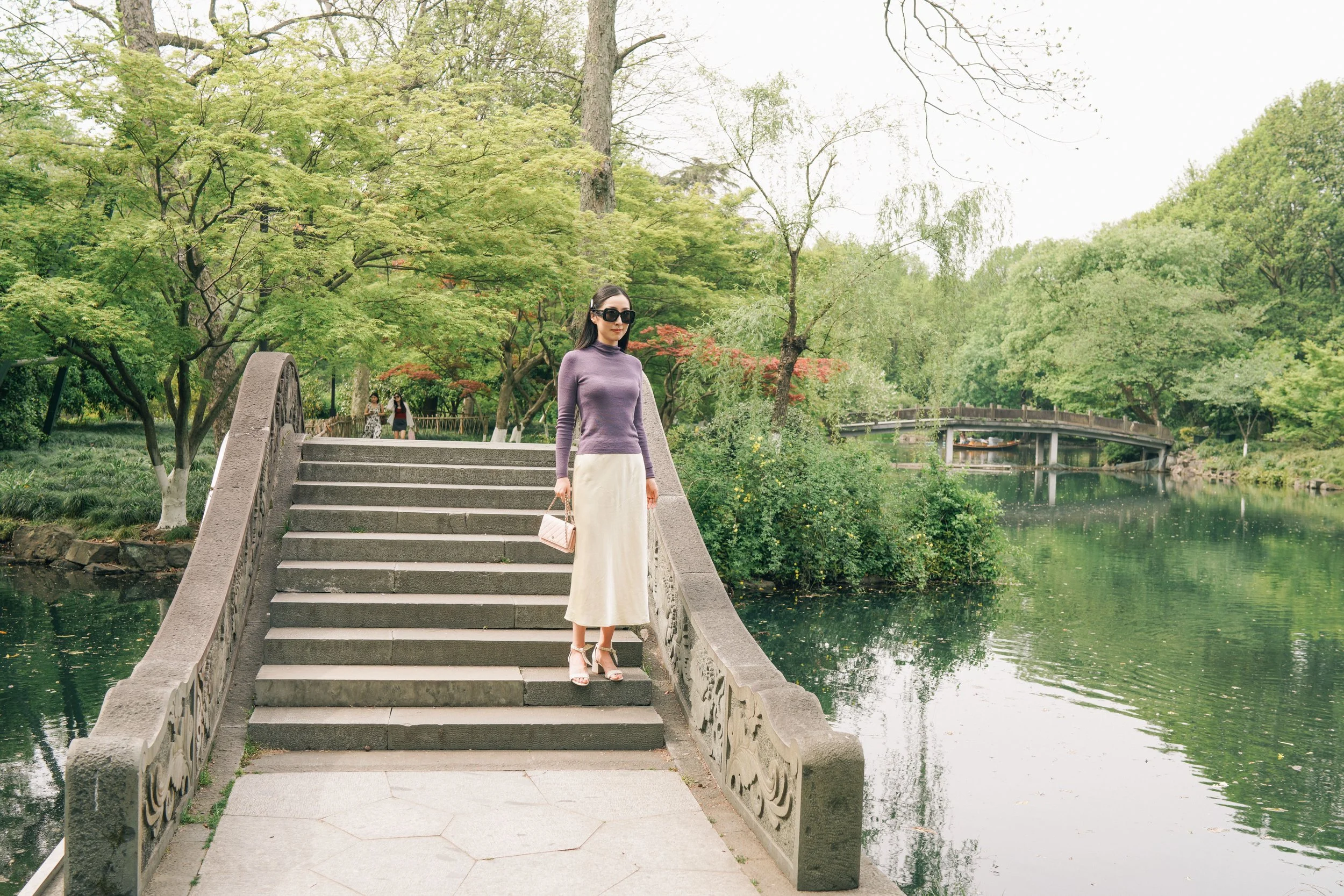
We drifted from the open lake into Wugui Tan(乌龟潭), the Tortoise Pond, where the channel narrowed and the trees leaned in from both banks. Willow branches hung low. Light fell through the canopy in broken pieces, shifting across the hull and the rippling water. Passing through several stone arch bridges, the light snapped off and on in an instant and I felt like I had slipped through a gap in time and come out somewhere I couldn't quite name.
A few wild ducks appeared alongside the boat, and I noticed they weren't simply drifting. Their heads tilted, eyes sharp, keeping just enough distance to look casual. The moment I pulled out a small bag of bread crumbs I'd brought along, the act was up. They surged toward the hull, paddling hard, jostling for position. I scattered a handful across the water and ducks chased the boat. Then another boat passed nearby, and someone on board tossed something in. The ducks pivoted instantly and glided off in the new direction. I watched them realized ducks have learned the rules of this lake, and they work it.
West Lake welcomes everyone. But I understood, only when the boat slowed and I slowed with it, that I had finally arrived.
Part II · In the Tea Garden
Participating in a season, with my own hands
I arrived just before Qingming, which the farmers call míng qián(明前), before the festival, when the first buds are at their most tender, their flavour cleanest, their fragrance uncluttered. Come a week later and the moment has passed.
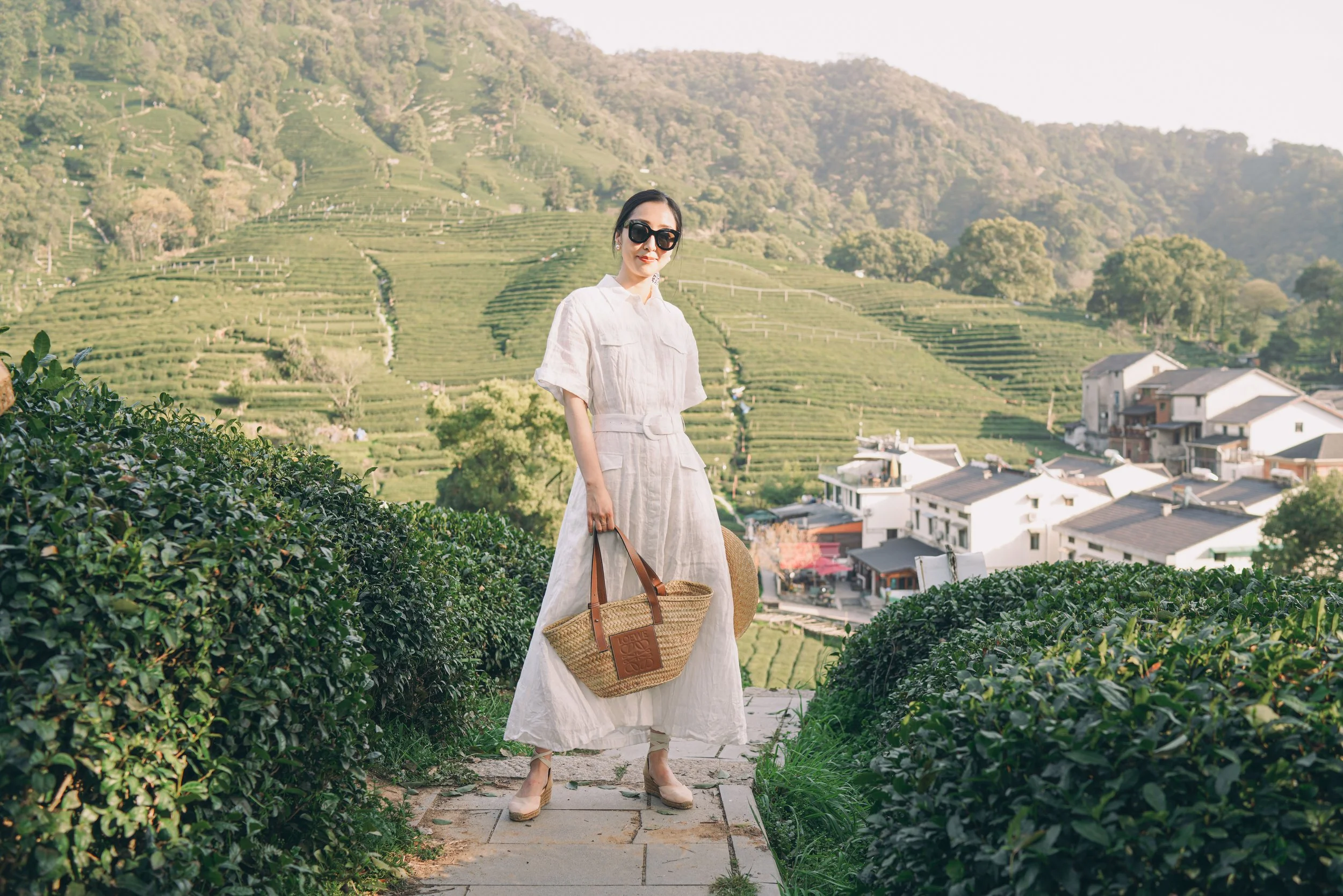
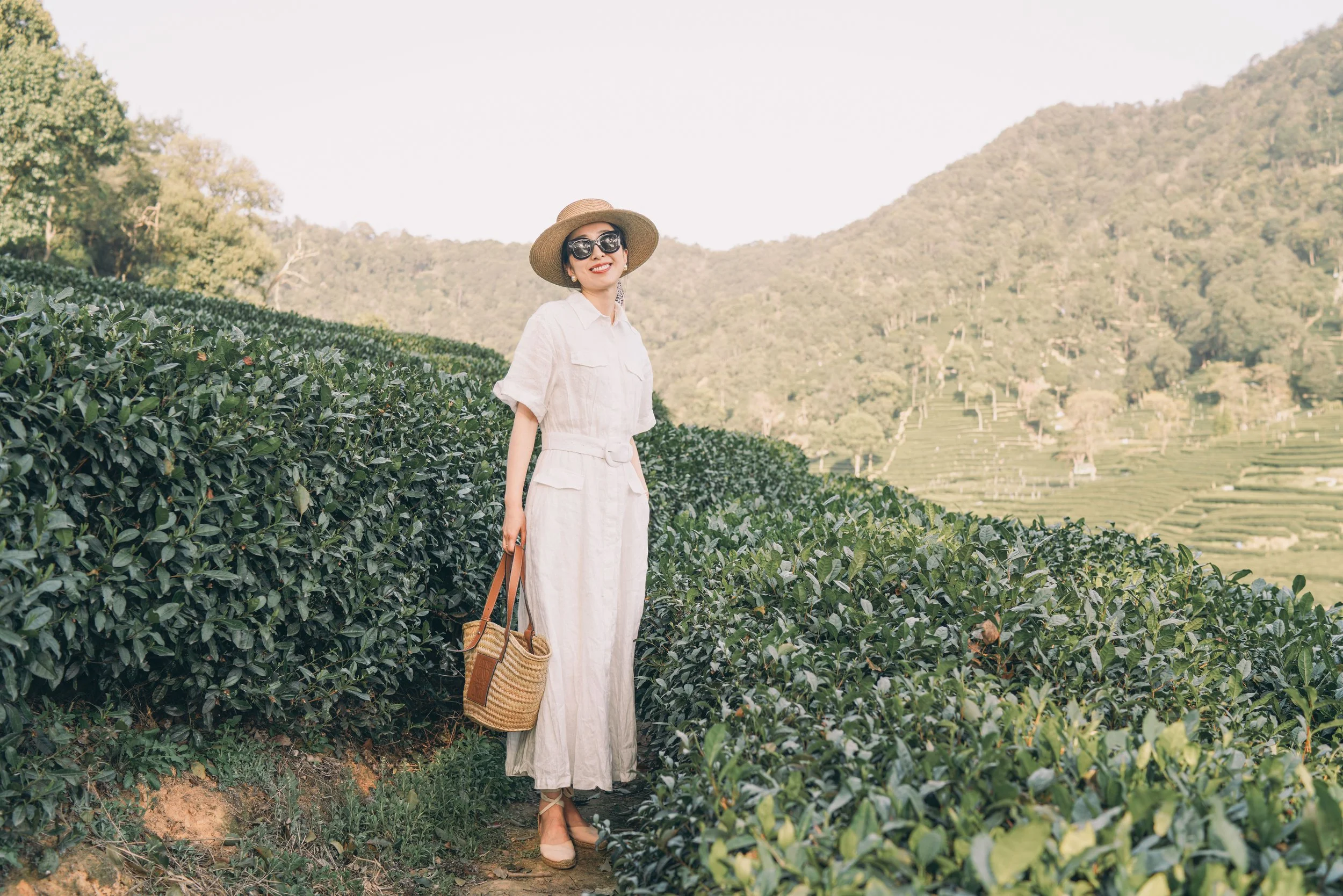
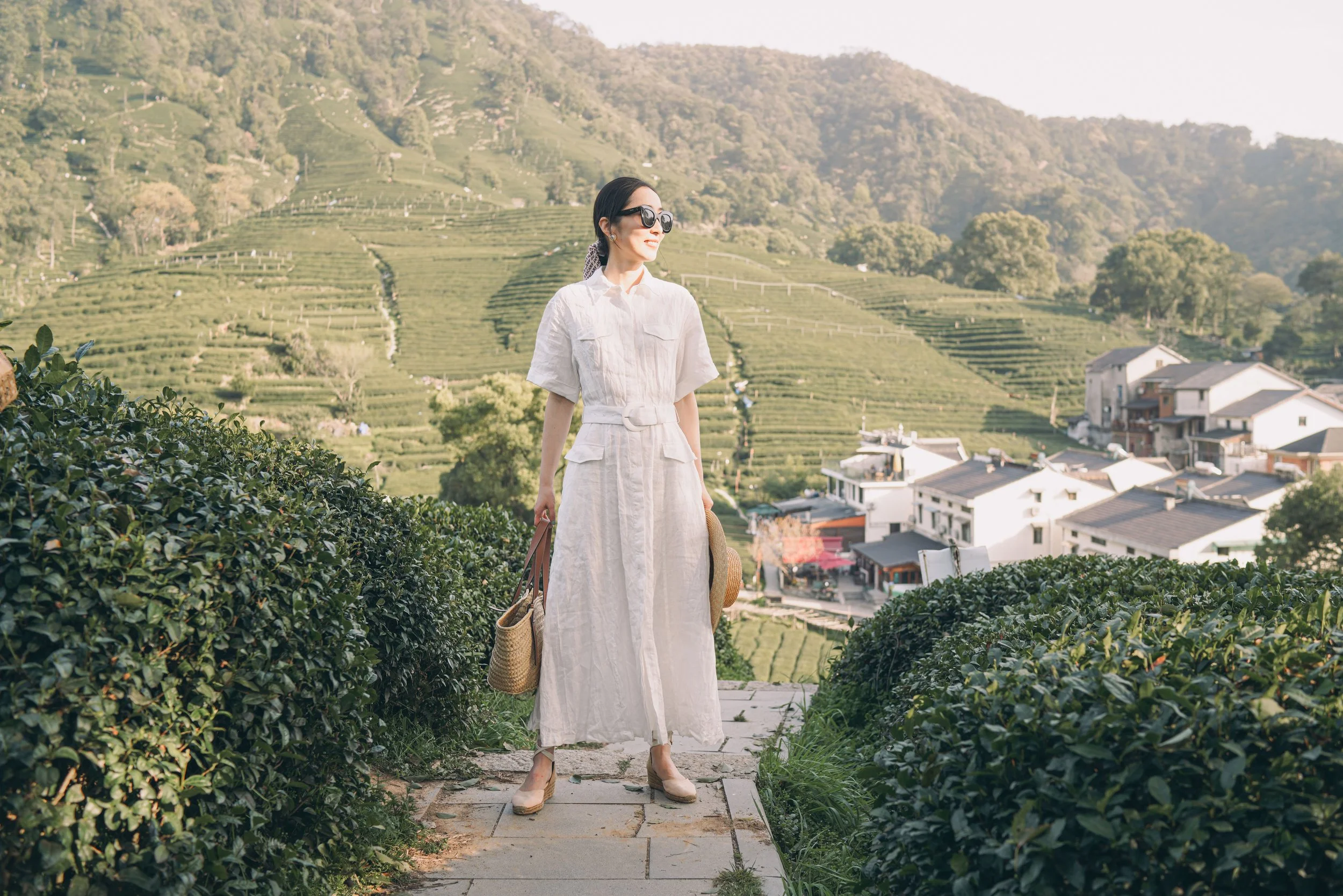
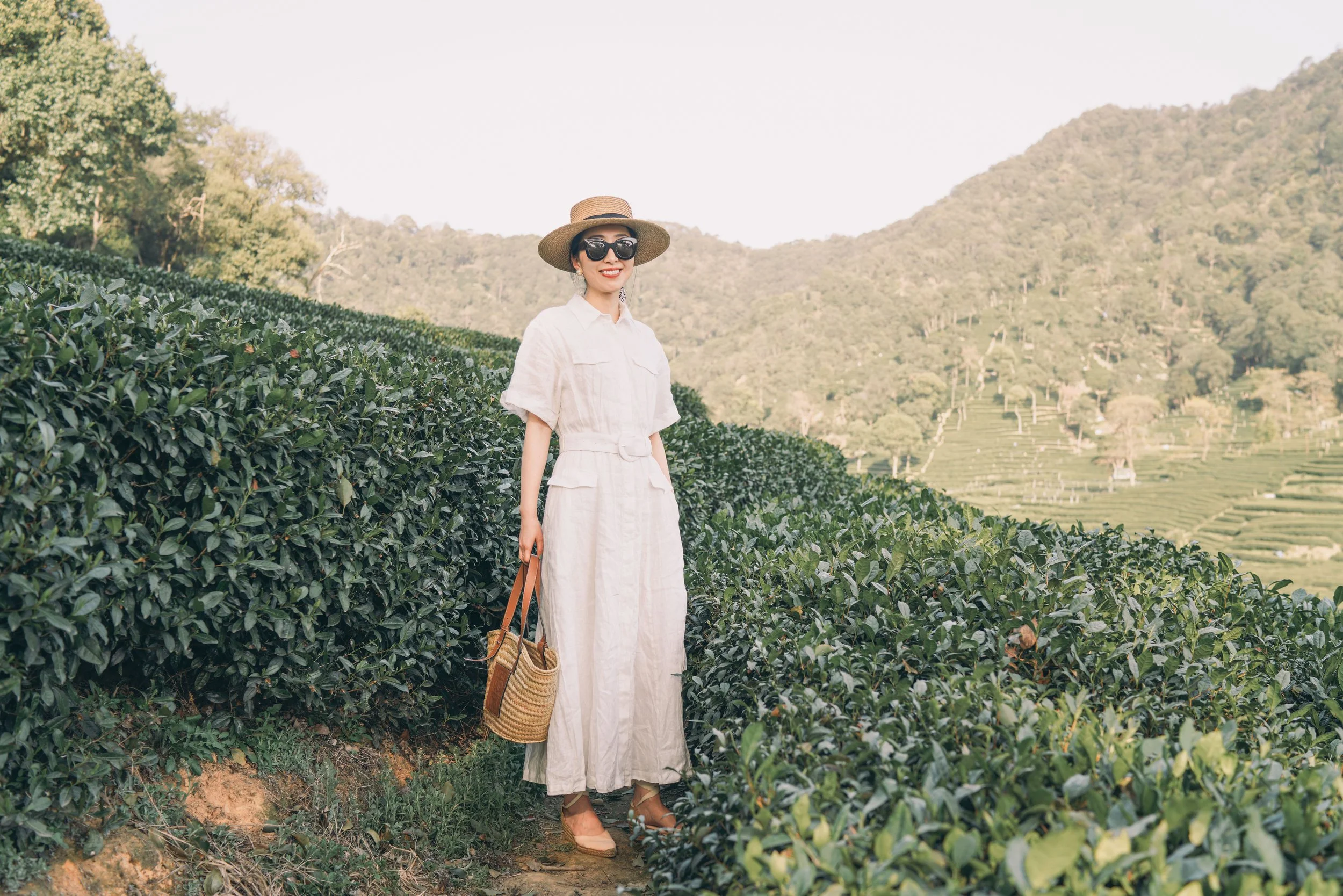
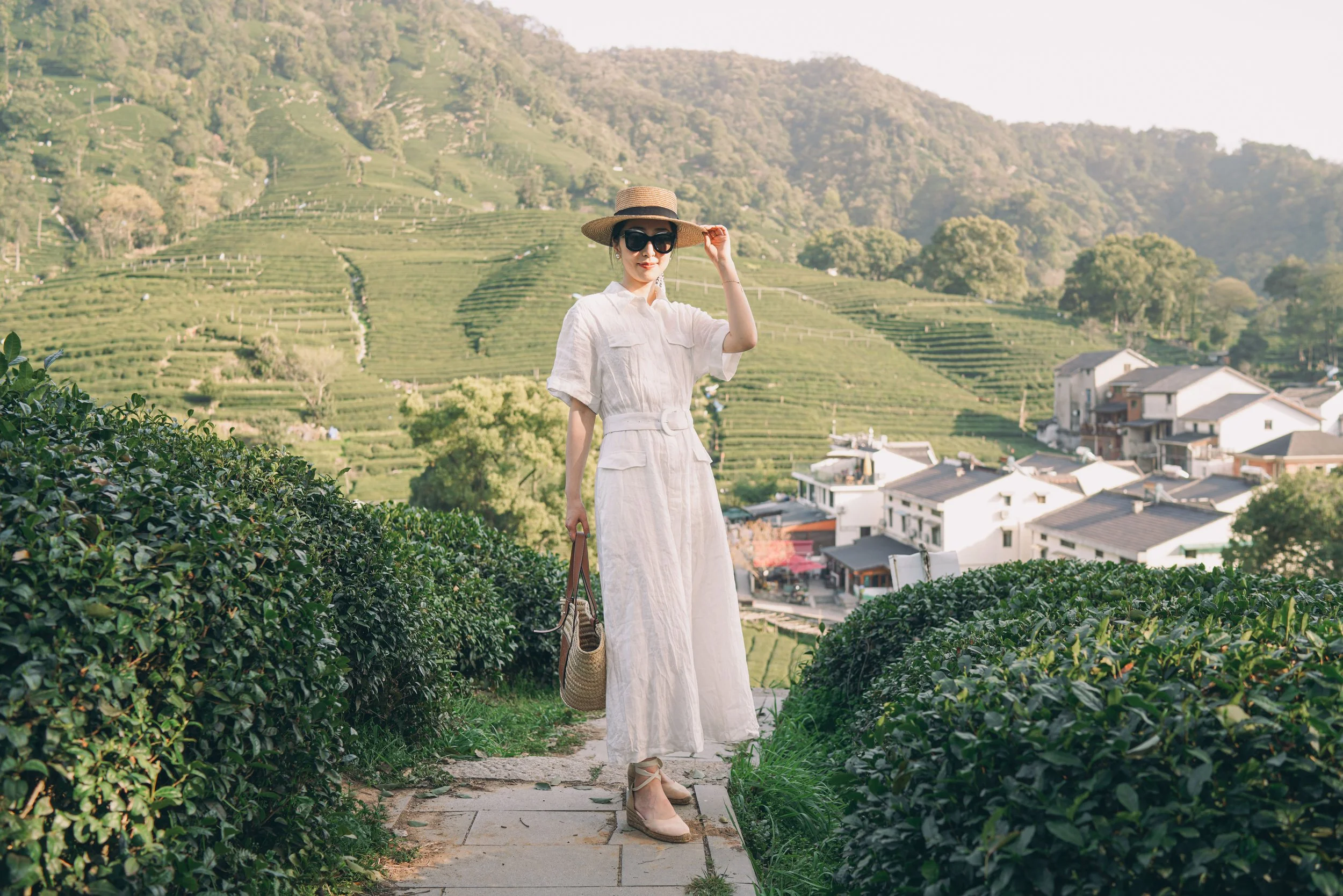
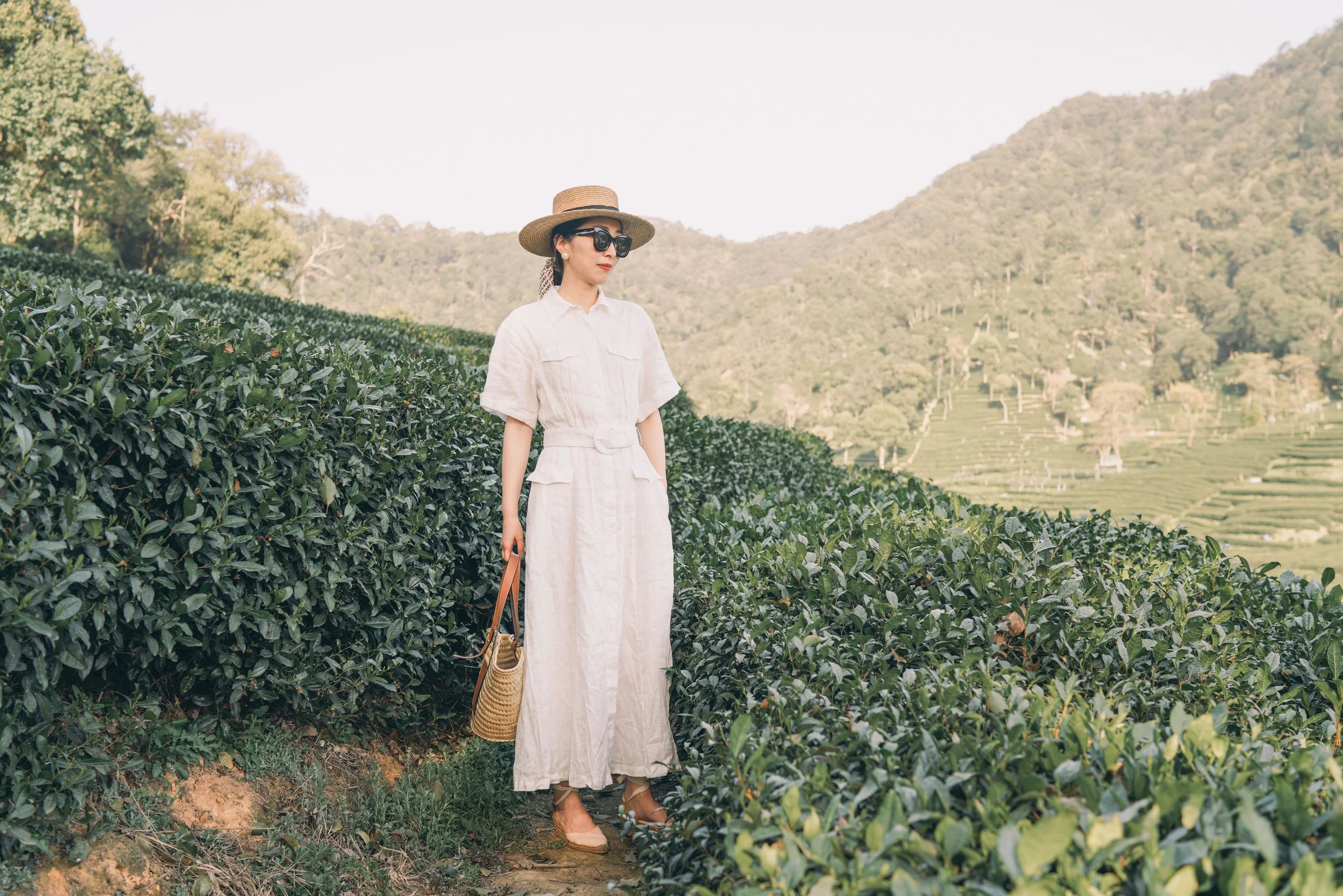
The tea fields opened up in terraced rows of green, still carrying the cool edge of early spring. Walking between the bushes, I had the distinct feeling of being washed clean.
Picking is not casual work. Only one bud and one leaf and the touch must be light. I crouched between the rows and moved my fingers slowly through the leaves.
The tea I picked went straight into the wok. My hands touched the iron, feeling the heat, turning the leaves without stopping. The roasting is the heart of Longjing. Without it, there is no tea.
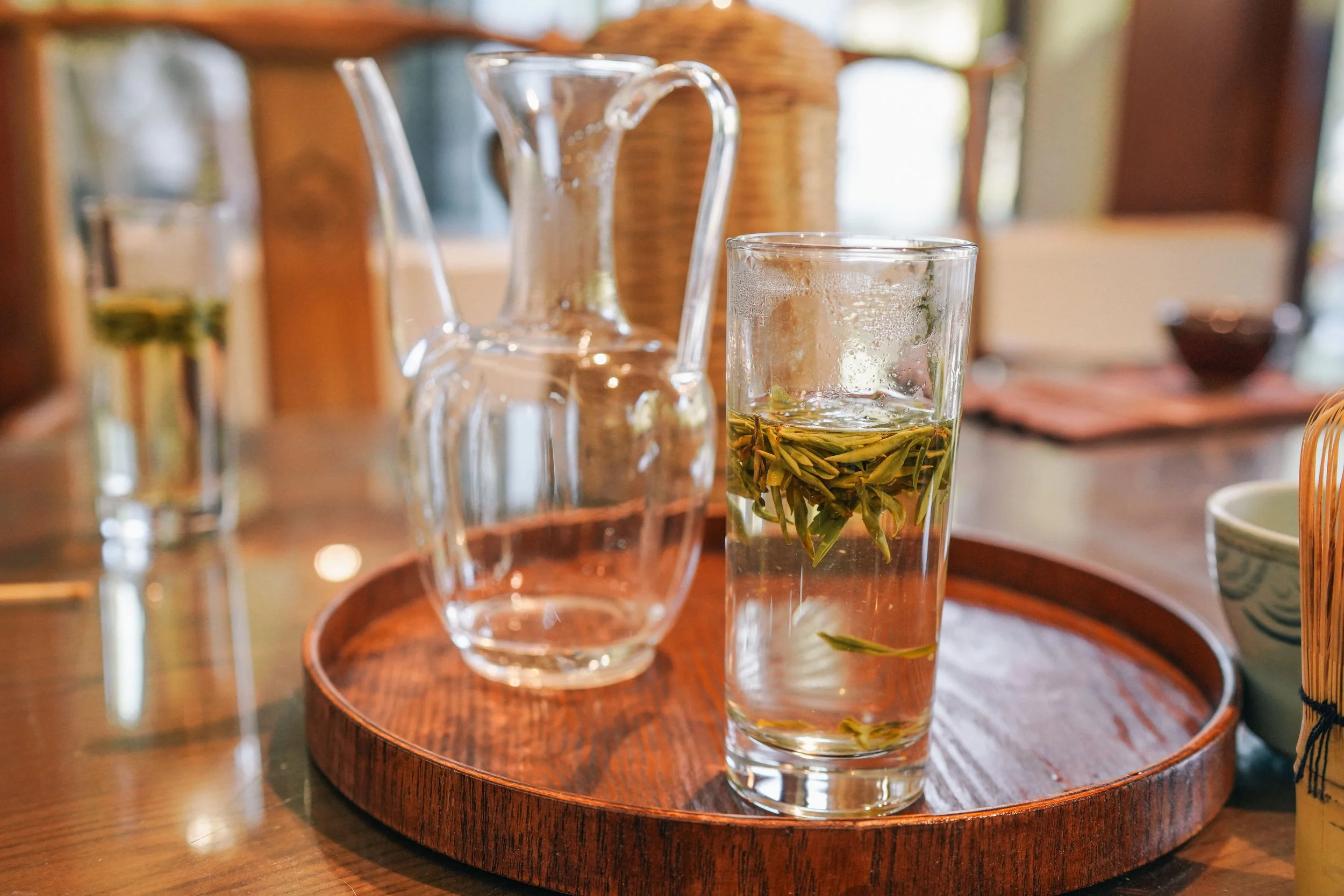
The cup they poured me afterwards was pale gold, with a faint grassy edge and a clean sweetness that arrived at the back of the throat a few seconds after I swallowed. It tasted almost exactly like the air in the tea garden I had smelled.
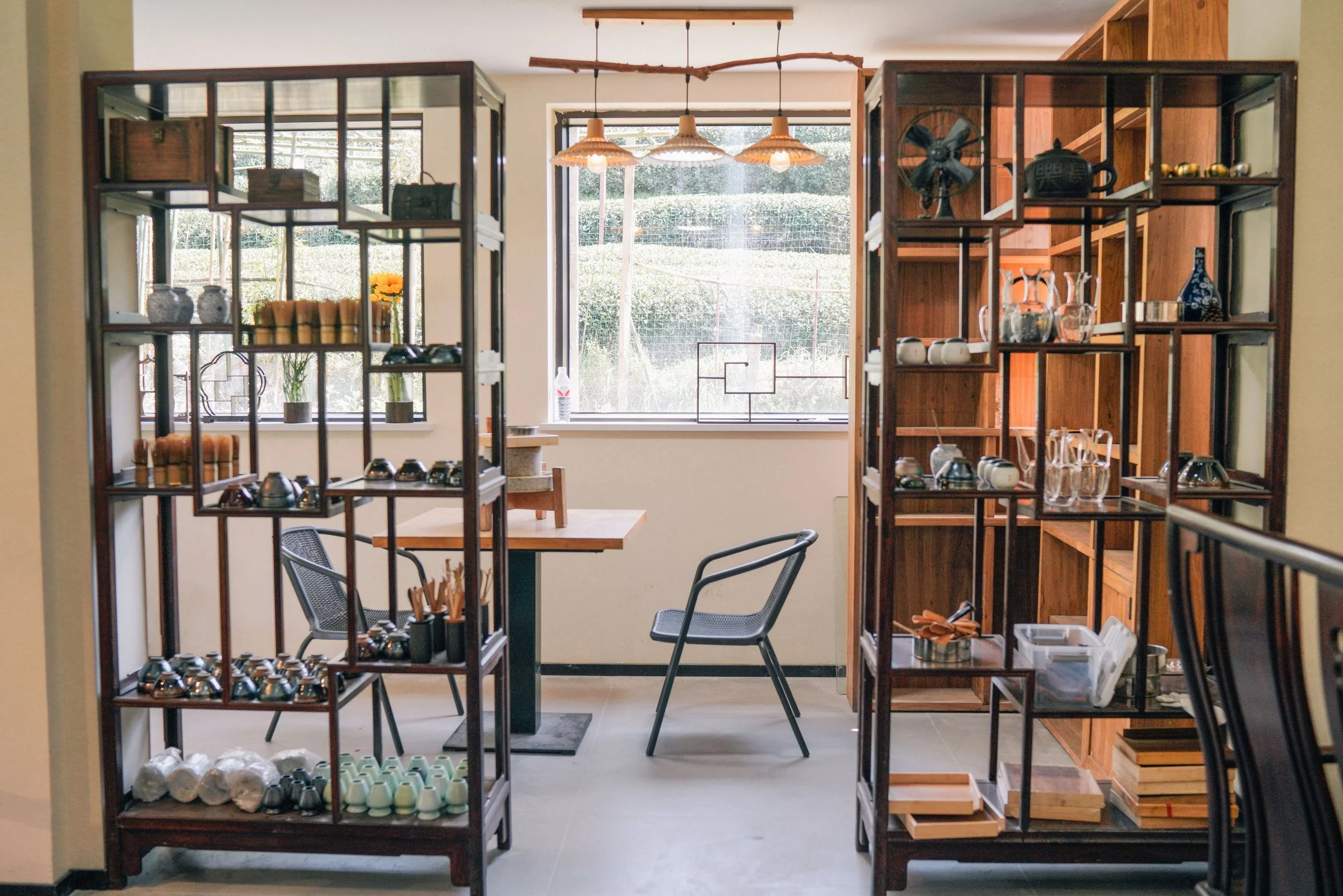
We also ground some of the dried leaves into powder on a stone mill, in slow circles, the green deepening as the texture grew finer. Mixed with a little hot water and whisked into a froth, it became matcha.
Spring as a force field
Hangzhou in April is a vast field of green energy. Not because it is spectacular, but because it is in the middle of becoming tea shoots pushing up, willows unfurling and water catching light. You walk into it, and it carries you.
Go before Qingming. Take the boat. Pick the tea. Drink the cup while it's still warm. Not for the photograph, but because this is the most alive in the whole year, and it's worth being there for it.